Bright Beats Anatomy and Physiology · Study Sheet
Carbohydrates, Lipids, Proteins, Enzymes, Nucleic Acids and ATP
Body Basics · Video code OM1
 Scan to watch
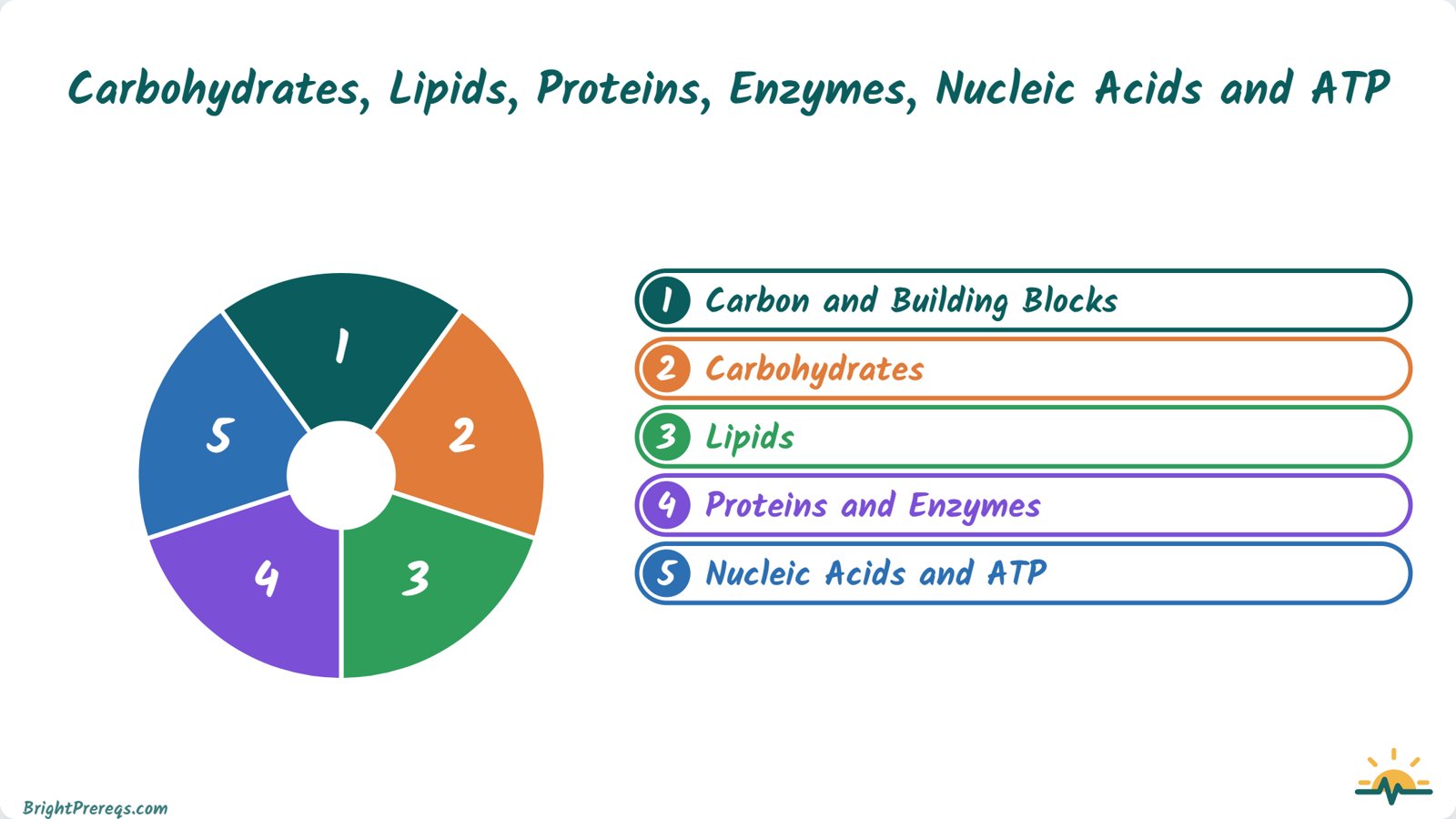
Anatomy and Physiology, Body Basics. Carbohydrates, lipids, proteins, enzymes, nucleic acids and ATP.
What are the body's large molecules made of, and what does each one do?
Five parts follow: carbon and building blocks; carbohydrates; lipids; proteins and enzymes; and nucleic acids and ATP.
Part 1: carbon and building blocks, what the large molecules are made of.
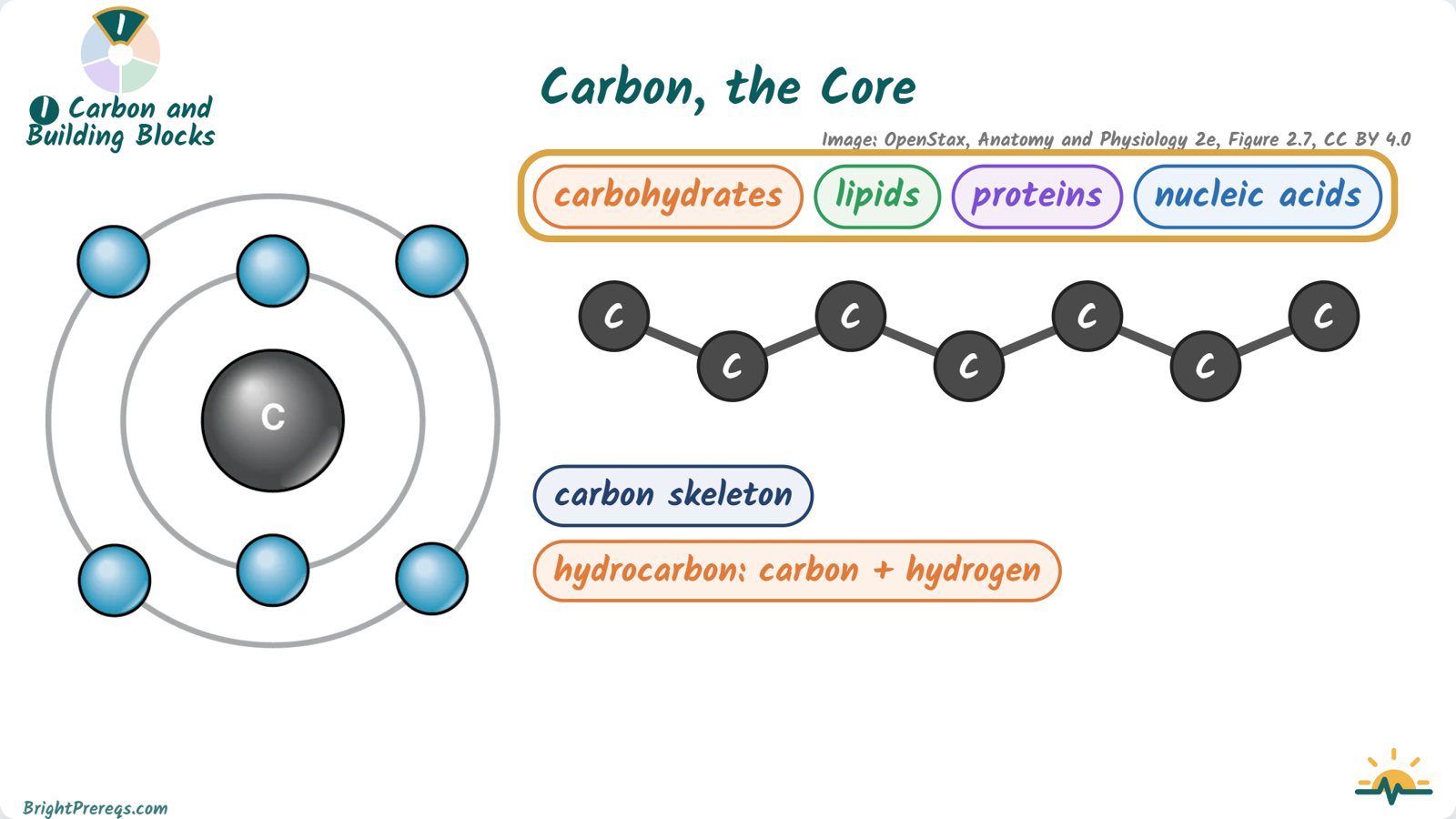
Four kinds of organic compounds matter most to the body: carbohydrates, lipids, proteins and nucleic acids.
All of them are built on carbon. A carbon atom has four electrons in its outer shell. Atoms tend to fill that shell to eight, but carbon does not give away or take four. Instead, it shares them easily in covalent bonds.
Carbon atoms often link into long chains, called a carbon skeleton. Carbon bonded with hydrogen is called a hydrocarbon. So carbon is the core of all four kinds.
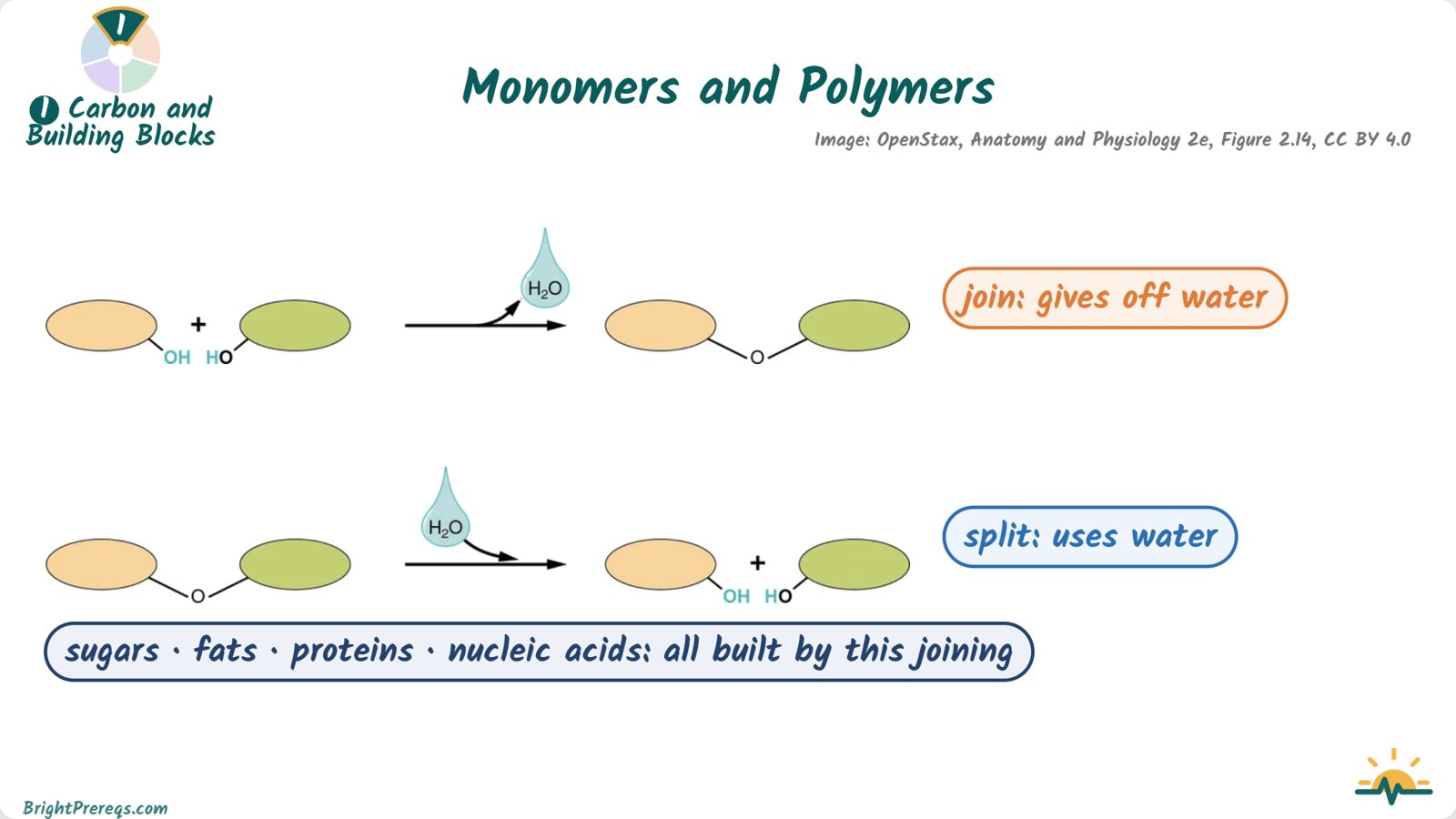
These compounds are large molecules, called macromolecules. Carbon bonds so readily that small molecules easily build into larger ones. Many are built from small repeating units, called monomers.
Like beads on a necklace, monomers link into long chains called polymers. Mono means one, and poly means many.
Monomers join by dehydration synthesis, which gives off a molecule of water: one monomer gives up a hydrogen atom, and the other gives up an oxygen and a hydrogen. Polymers split apart by hydrolysis, which uses a molecule of water. Sugars, fats, proteins and nucleic acids are all built by this joining.
Part 2: carbohydrates, built from sugar units.
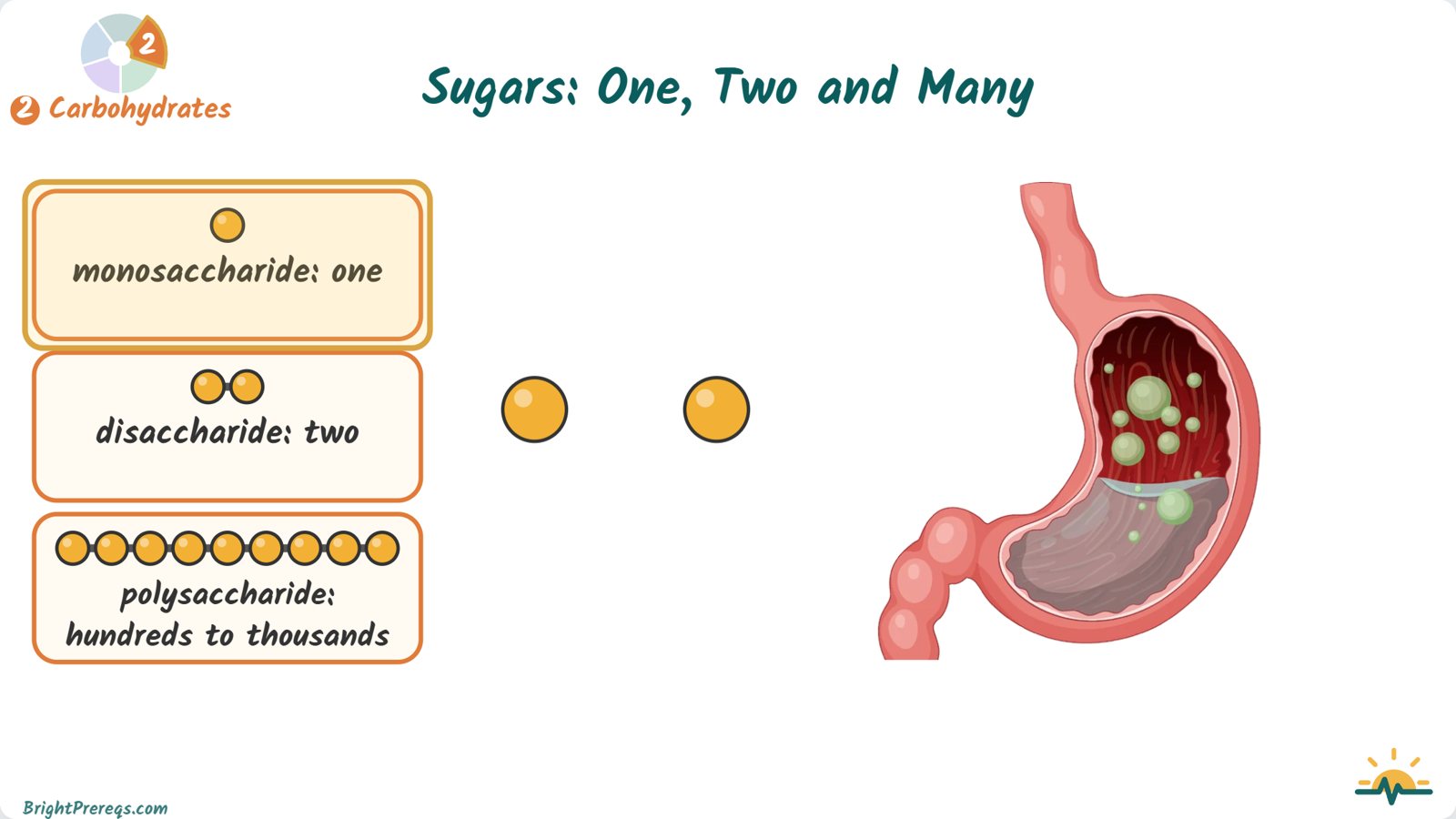
A carbohydrate is made of carbon, hydrogen and oxygen. The name means hydrated carbon, because the hydrogen and oxygen come in the same two-to-one ratio as in water. Carbohydrates are also called saccharides, a word that means sugars.
They come in three sizes, from smallest to largest. A monosaccharide, a simple sugar, is one unit. A disaccharide, a double sugar, is two. A polysaccharide is a chain of hundreds to thousands.
Five simple sugars are important. Glucose, fructose and galactose each have six carbons. Ribose and deoxyribose have five.
Two simple sugars join into a double sugar by dehydration synthesis. Three double sugars come from food: sucrose, which is table sugar; lactose, milk sugar; and maltose, malt sugar.
The body cannot use double sugars as they are. The digestive tract splits them back into simple sugars by hydrolysis, using water. So the simple sugar is the unit the body uses.
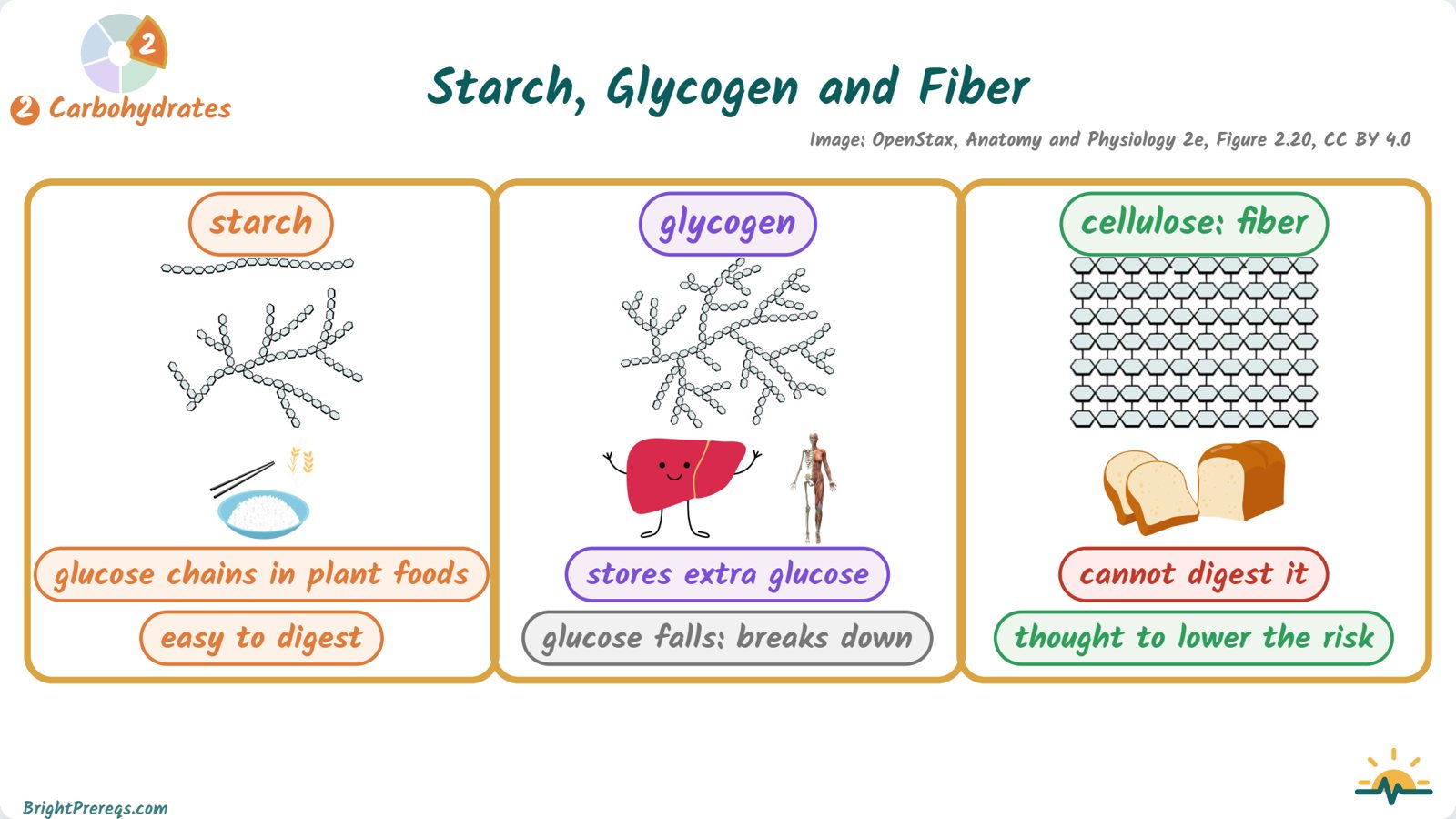
Three polysaccharides matter. Starches are chains of glucose stored in plant foods, and they are fairly easy to digest.
Glycogen is also a chain of glucose. The body stores extra glucose as glycogen, in the muscles and the liver.
When blood glucose falls, the body breaks glycogen down to release glucose again.
Cellulose, from the walls of plant cells, is the fiber in food. People cannot digest it, but fiber helps a person feel full, so they eat less, and it keeps the digestive tract healthy.
A diet high in fiber is also thought to lower the risk of heart disease, and possibly some cancers. So starch is digested, glycogen is stored, and fiber is not digested.
Most carbohydrate in the diet comes from grains, fruits, legumes and other vegetables. Lactose comes from dairy foods.
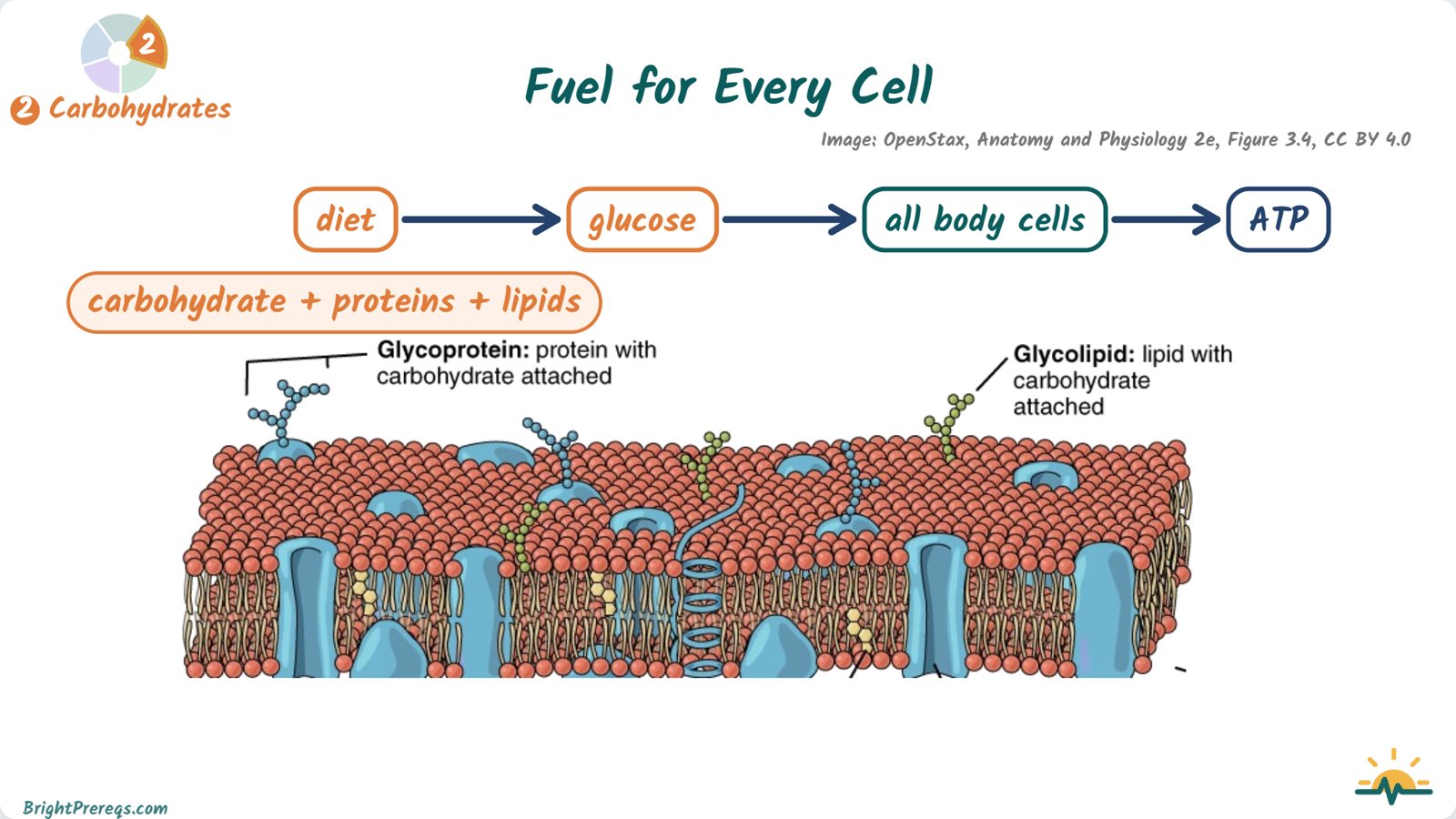
All body cells can use glucose for fuel. Nerve cells and red blood cells can use only glucose.
Breaking down glucose makes adenosine triphosphate, or ATP, the cell's ready energy. More ATP is made when oxygen is present.
Besides being fuel, small amounts of carbohydrate join with proteins and lipids in the membrane that wraps each body cell. So carbohydrate is mainly fuel, and a small part of cell structure.
Part 3: lipids, made mostly of hydrocarbons.
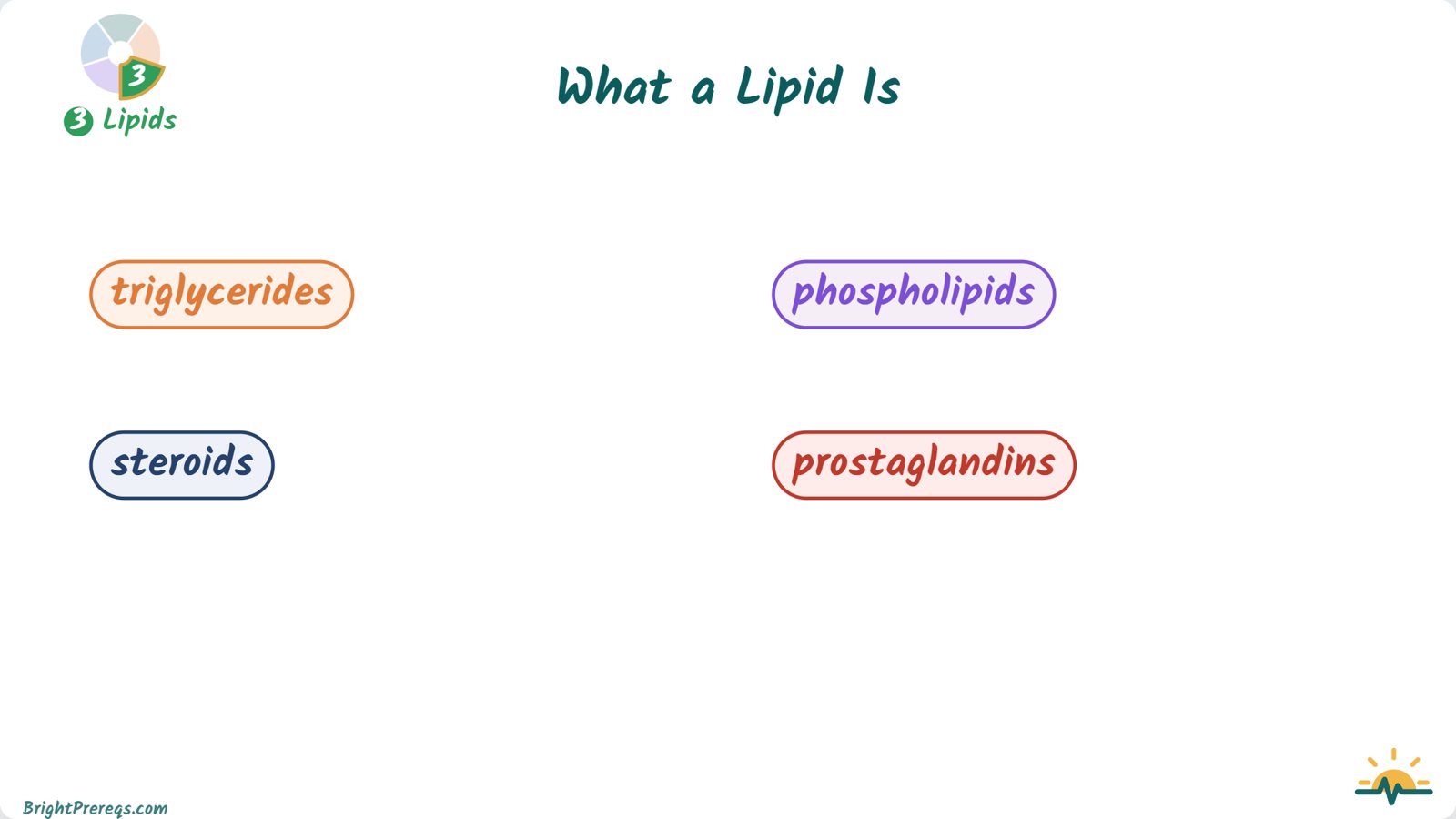
Lipids are a varied group made mostly of hydrocarbons. Those hydrocarbons are nonpolar, so all lipids are hydrophobic: they do not dissolve in water.
Four kinds matter in the body: triglycerides, phospholipids, steroids and prostaglandins.
A triglyceride, usually called a fat, is one of the most common lipids in food, and the most common in body tissues.
It has a backbone of glycerol, with three fatty acid chains attached by dehydration synthesis.
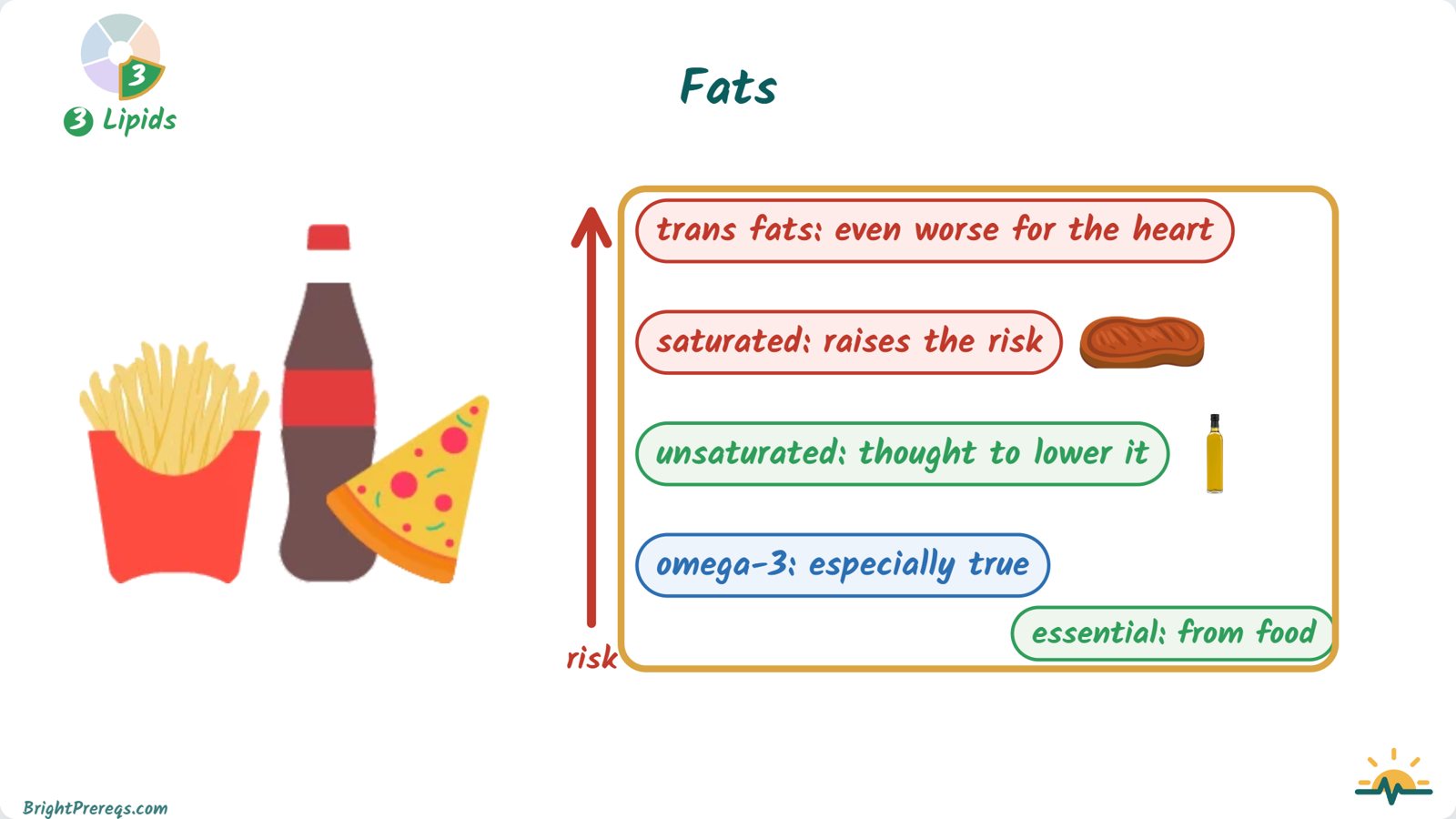
Saturated fatty acids have no double bonds. Their straight chains pack tightly, so they are solid or nearly solid at room temperature, like butter, lard and the fat on a steak.
Unsaturated fatty acids have double bonds that kink the chain, so they cannot pack tightly and are liquid at room temperature. Plant oils, such as olive oil, are examples.
A diet high in saturated fat raises the risk of heart disease. A diet high in unsaturated fat is thought to lower it.
That is especially true of the omega-3 fatty acids in cold-water fish, such as salmon.
Omega-3 fats are essential fatty acids: the body cannot make them, so they must come from food.
Trans fats are made by chemically treating plant oils, and are found in some processed foods and margarines. They are thought to be even worse for the heart and blood vessels than saturated fat. So for the heart, from worst to best, the order is thought to be trans, saturated, unsaturated, then omega-3 fats.
As a group, triglycerides are a major fuel. At rest or asleep, most of the body's energy comes from fat stored in adipose tissue, the body's fat tissue.
Fat also fuels long, slow activity, such as gardening or hiking.
Fat in food helps the body absorb the fat-soluble vitamins: A, D, E and K.
Stored fat cushions the bones and organs, and it insulates the body to keep in heat. So fat fuels the body, helps absorb vitamins, cushions the organs and keeps in heat.
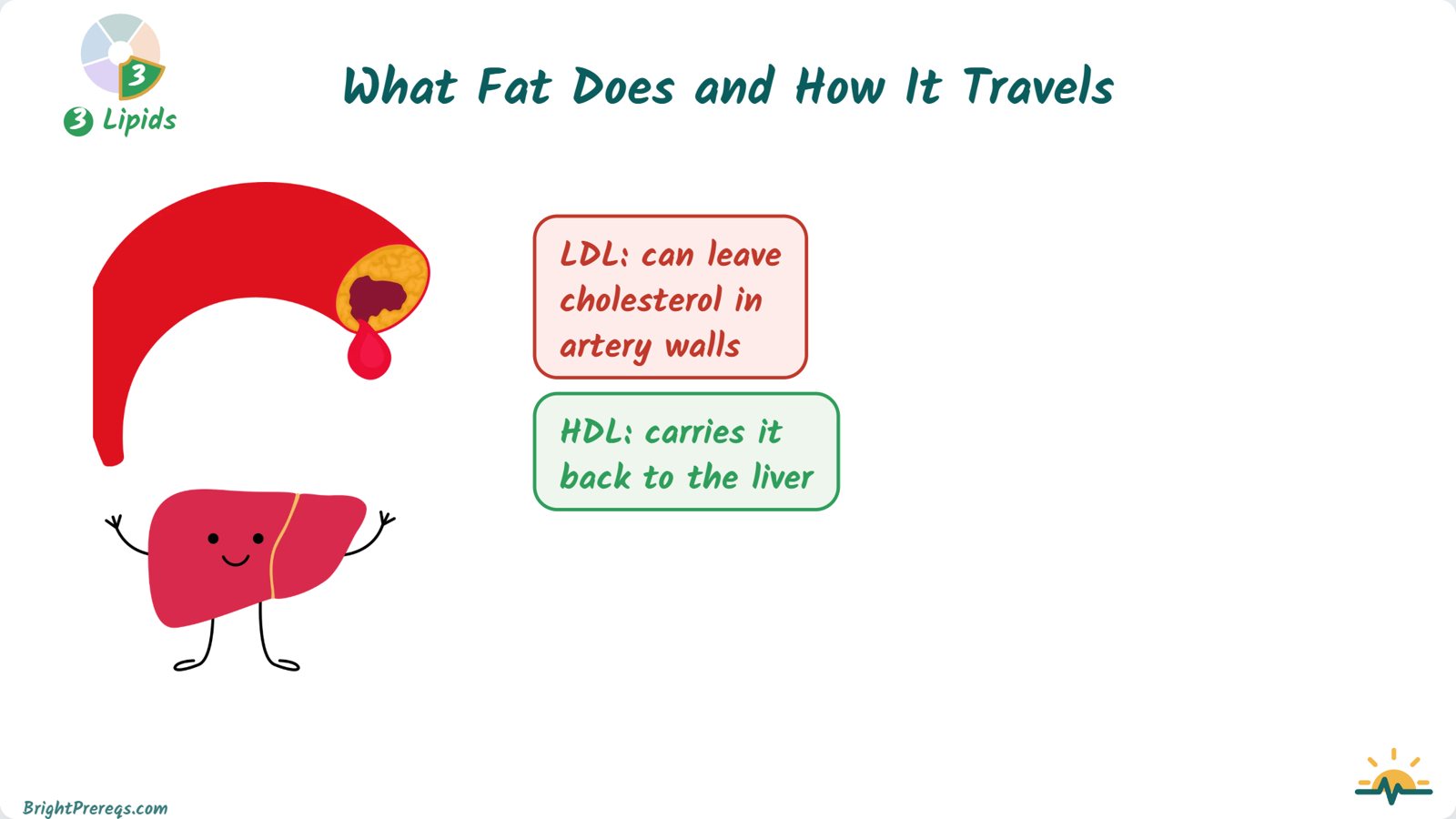
Fats do not dissolve in water, so they travel in the body's fluids packed inside protein wrappers, called lipoproteins.
Two important lipoproteins carry cholesterol. Too much low-density lipoprotein, or LDL, can leave cholesterol in artery walls. High-density lipoprotein, or HDL, carries extra cholesterol back to the liver.
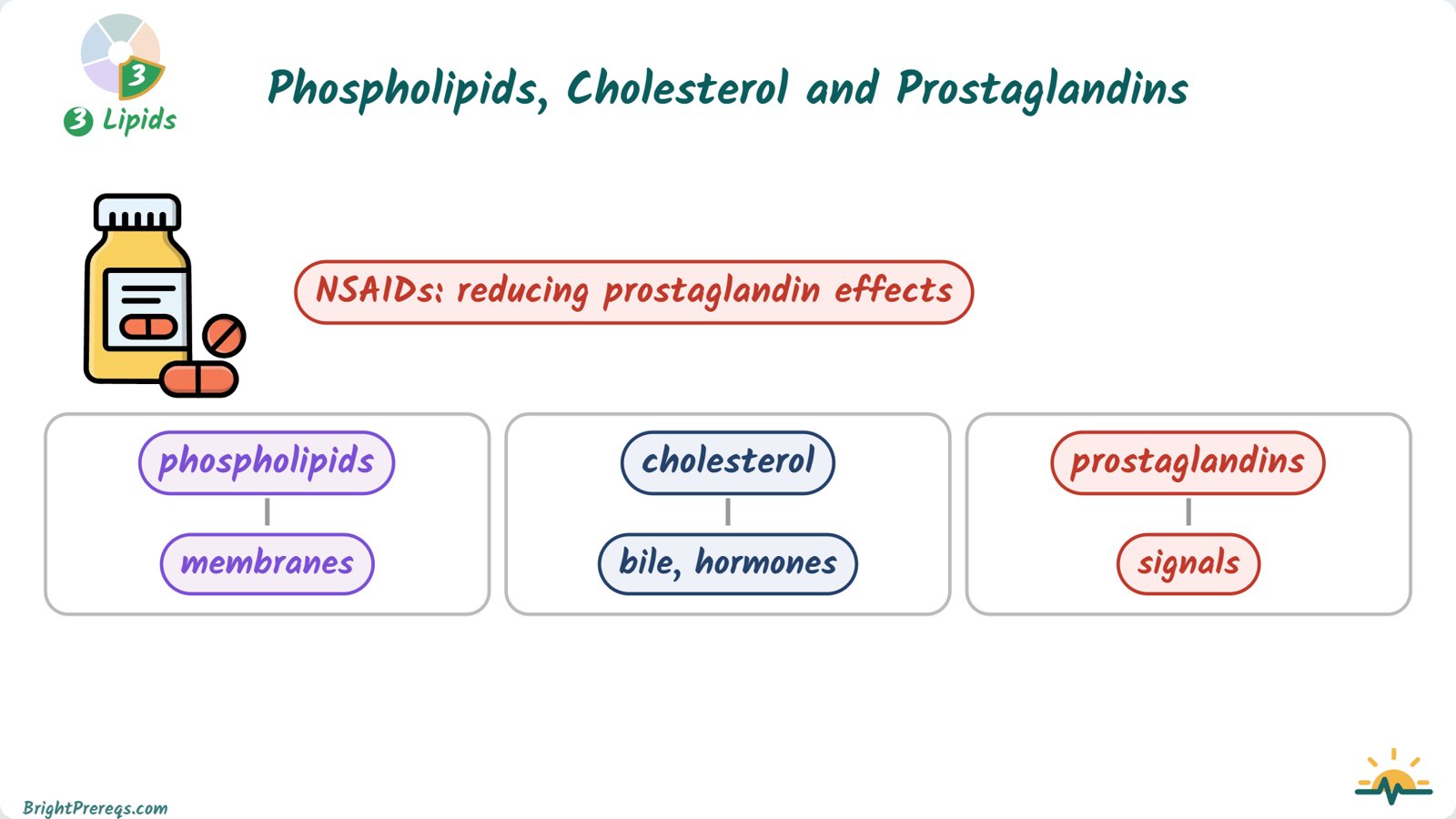
The second kind, the phospholipid, has two fatty acid tails that avoid water, and a charged head that is drawn to water. Phospholipids form the membrane around each cell.
The third kind, steroids, are built on four rings of carbon. The most important is cholesterol, which the liver makes, and which is found in most animal foods.
The body needs cholesterol. It is part of bile, which helps break up fat in food. It is a building block of many hormones. And like phospholipids, it is part of the cell membrane, where its water-avoiding and water-loving parts help control what flows into and out of the cell.
Last come the prostaglandins, signaling molecules made from unsaturated fatty acids. They help control blood pressure and inflammation, and they make nerves more sensitive to pain. Omega-3 fats help the body make some of them, which is one reason omega-3 fats lower the risk of heart disease.
Pain medicines called nonsteroidal anti-inflammatory drugs, or NSAIDs, work by reducing the effects of prostaglandins. So phospholipids build membranes, cholesterol builds bile and hormones, and prostaglandins carry signals.
Part 4: proteins and enzymes, built from amino acids.
Proteins are in every tissue and organ, not just muscle. Each one is a polymer: a chain of amino acids, joined by peptide bonds.
Unlike carbohydrates and lipids, every protein contains nitrogen, and many contain sulfur.
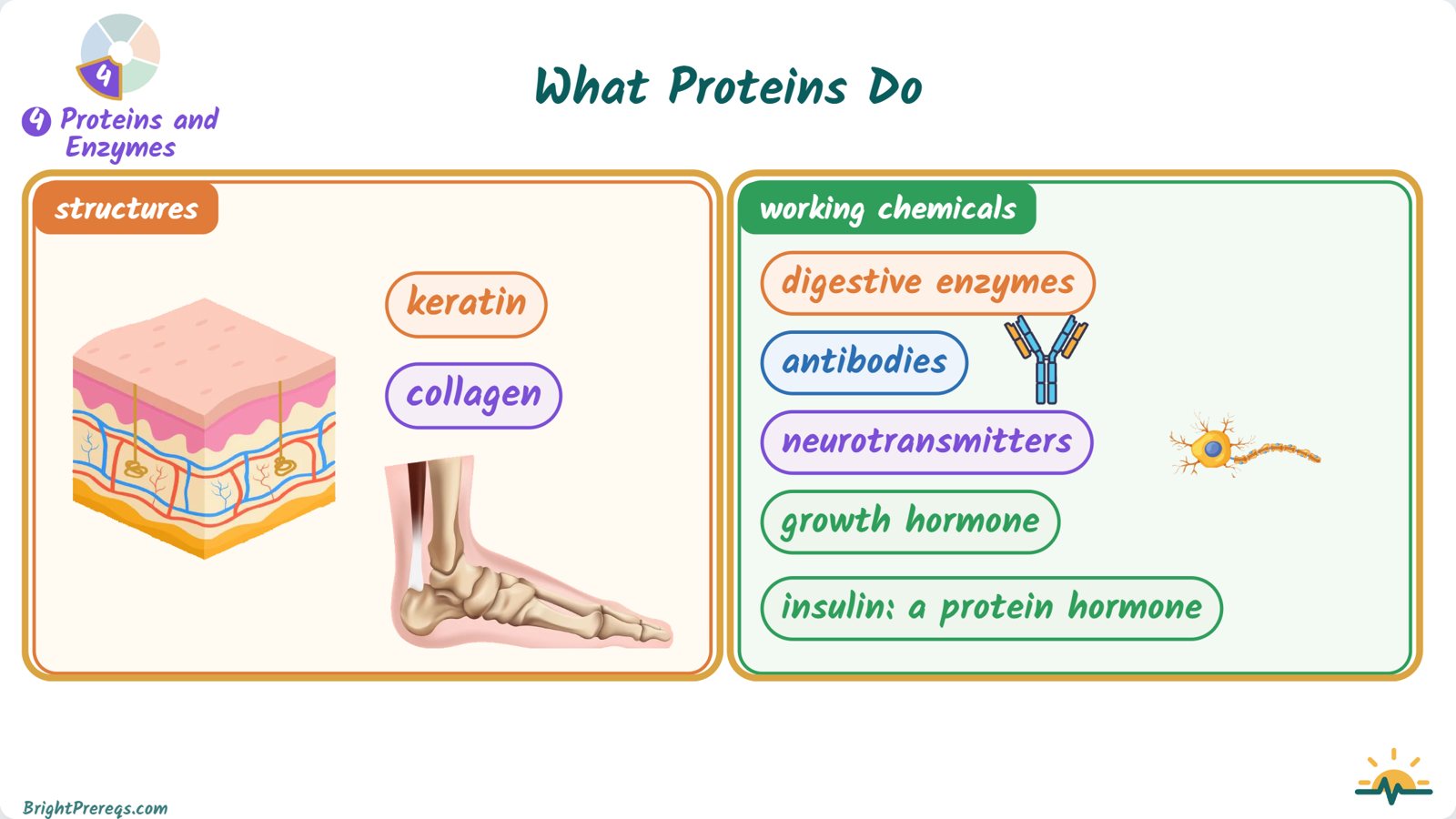
Some proteins form structures. Keratin protects the skin, and collagen is found in the skin, the bones, and the coverings of the brain and spinal cord.
Others are working chemicals: digestive enzymes, antibodies, the neurotransmitters that nerve cells use to signal, and some hormones, such as growth hormone.
One protein hormone is insulin, which maintains blood glucose levels. So proteins form the body’s structures and many of its working chemicals.
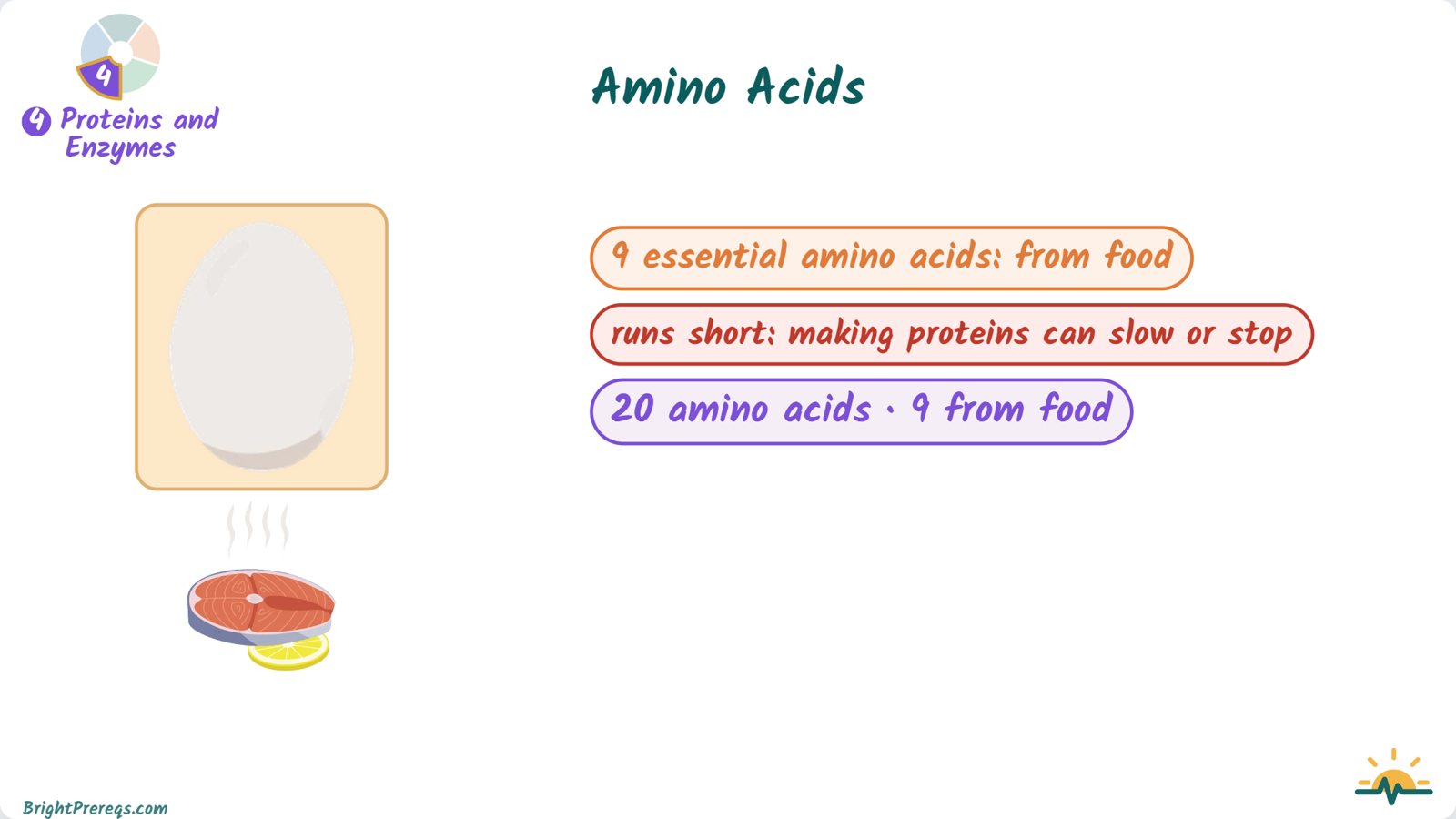
Just 20 amino acids build nearly all of the body's thousands of proteins.
Each amino acid has a central carbon holding an amino group, an acid group and a side chain. The side chain is what makes each amino acid different.
Because each amino acid has both an acid part and a base part, amino acids make good buffers that help balance pH.
The body can make most amino acids, but nine cannot be made. These essential amino acids, like the essential fatty acids, must come from food.
If an essential amino acid runs short, making the proteins that need it can slow, or even stop. So 20 amino acids, nine of them from food, build nearly all of the body’s proteins.
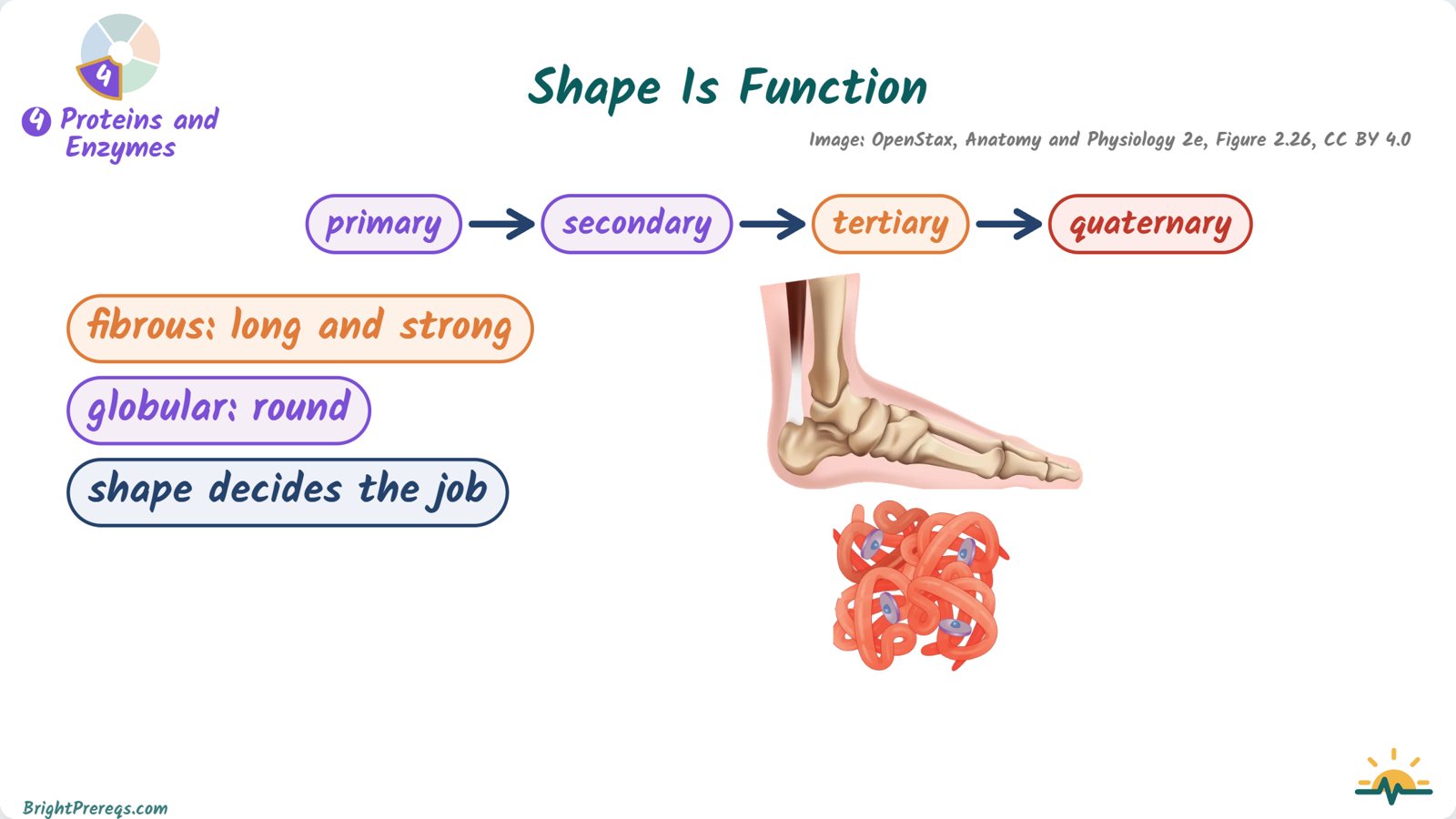
A protein's shape decides its job, just as a fork cannot be used to eat soup. Shape starts with the order of the amino acids, called the primary structure.
Hydrogen bonds then twist the chain into a spiral, or fold it into a sheet. This is the secondary structure. Like a twisted string, the spiral would not hold its shape on its own. Hydrogen bonds bridge one part of the chain to another, and hold it.
It folds again into a compact three-dimensional shape, the tertiary structure. Some proteins join two or more chains together, a quaternary structure.
Hemoglobin, which carries oxygen in red blood cells, has a quaternary structure: four chains, two alpha and two beta.
Because shape starts with the order, one changed amino acid can change the whole protein. In sickle cell anemia, a single swap in a beta chain makes red blood cells curve into a sickle shape that can clog arteries.
Shape can also be lost. Extreme heat, acids, bases and some other chemicals make a protein denature: it loses its shape and can no longer do its job. Milk curdling when lemon juice is added is an everyday example.
Long, strong proteins, like the collagen in bone, the scaffold that bone minerals are laid on, are fibrous proteins. Round proteins, like hemoglobin and enzymes, are globular proteins. Long proteins give strength, and round ones react: shape decides the job.
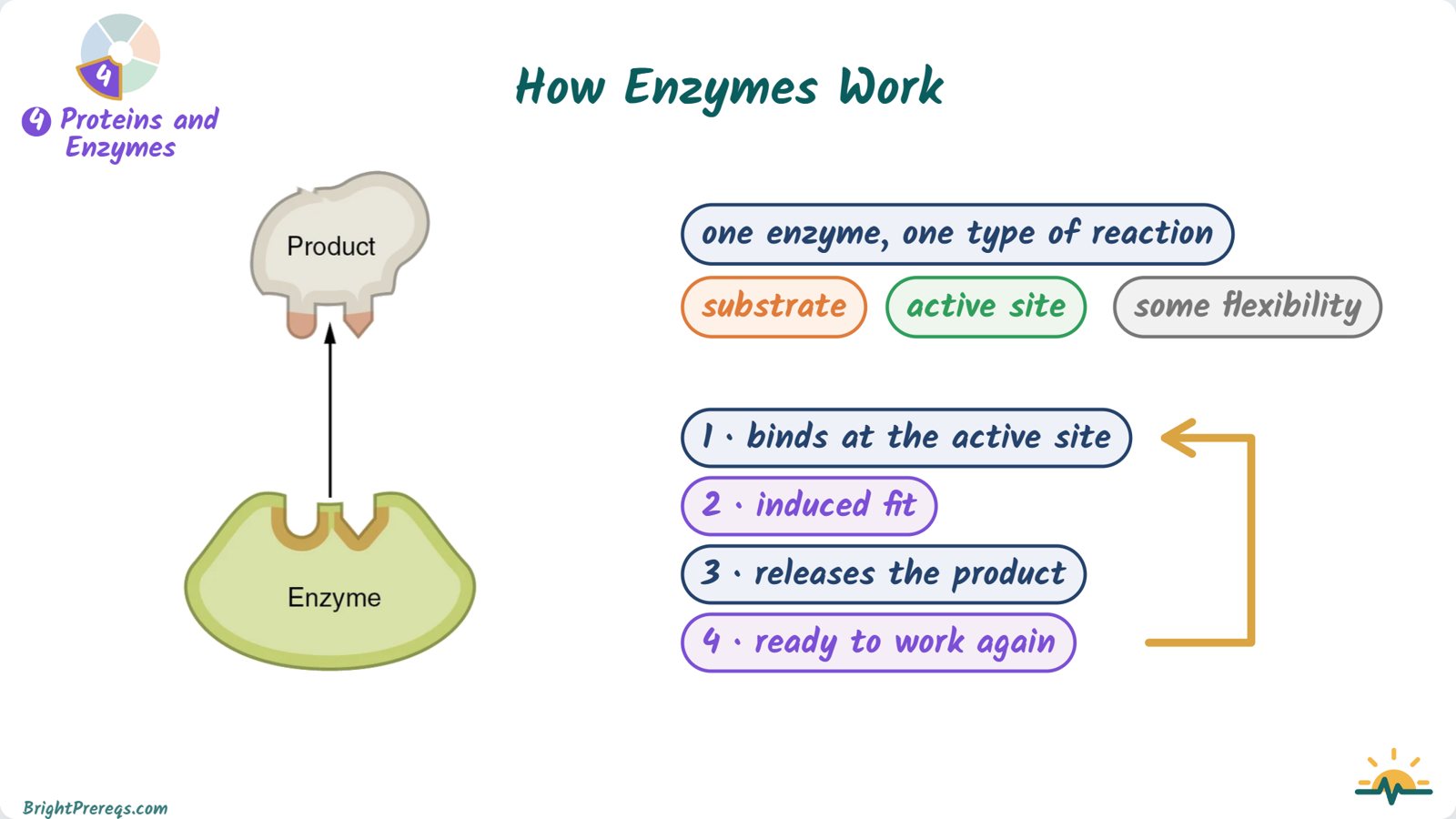
Without enzymes, the body would not work, like a laptop that takes minutes to answer each key you press. Each enzyme speeds up just one type of reaction. This is called specificity.
The reactant, called the substrate, binds to a spot on the enzyme called the active site, fitting like a jigsaw piece. Only a substrate with the right shape and charge fits, so each enzyme does one type of reaction.
Each substrate has its own matching enzyme, but there is some flexibility: some enzymes can act on several similar substrates.
When the substrate binds, the enzyme changes shape slightly to fit better, like a rubber glove around a hand. This is called induced fit. Holding the substrates in just the right position to react is likely part of how an enzyme speeds up a reaction.
The enzyme then releases the product, returns to its first shape, and is ready to work again. So the same enzyme binds, fits, releases, and starts again.
Proteins help balance fluid. They attract water, so healthy protein levels in the blood, the cells and the spaces between cells keep fluid in balance.
Proteins in the cell membrane also move electrolytes into and out of the cell.
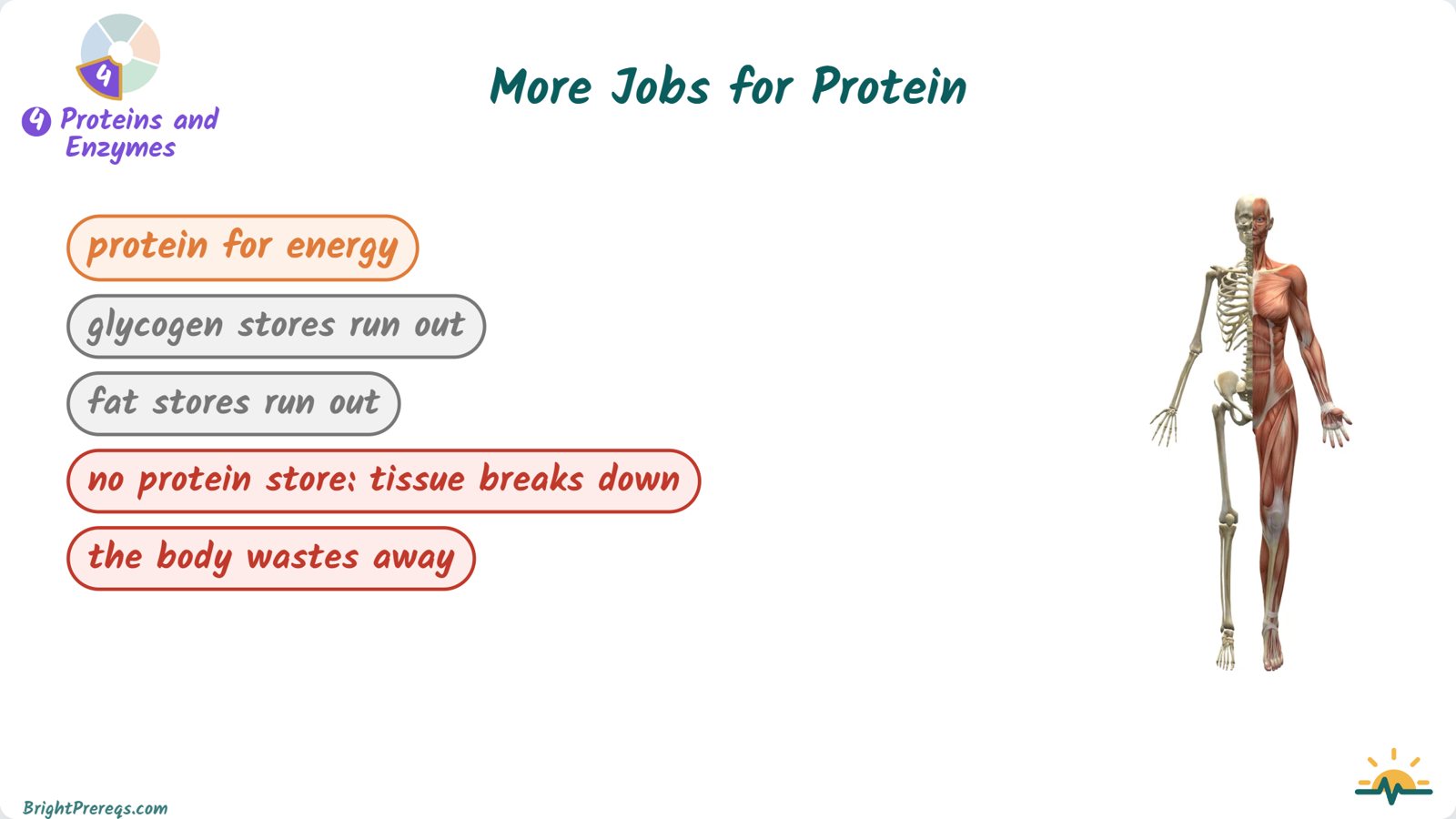
Last, the body can burn protein for energy when too little carbohydrate and fat is eaten, and its glycogen and fat stores run out.
But the body has no store of protein except its working tissues. So burning protein breaks down tissue, and the body wastes away.
Part 5: nucleic acids and ATP, built from nucleotides.
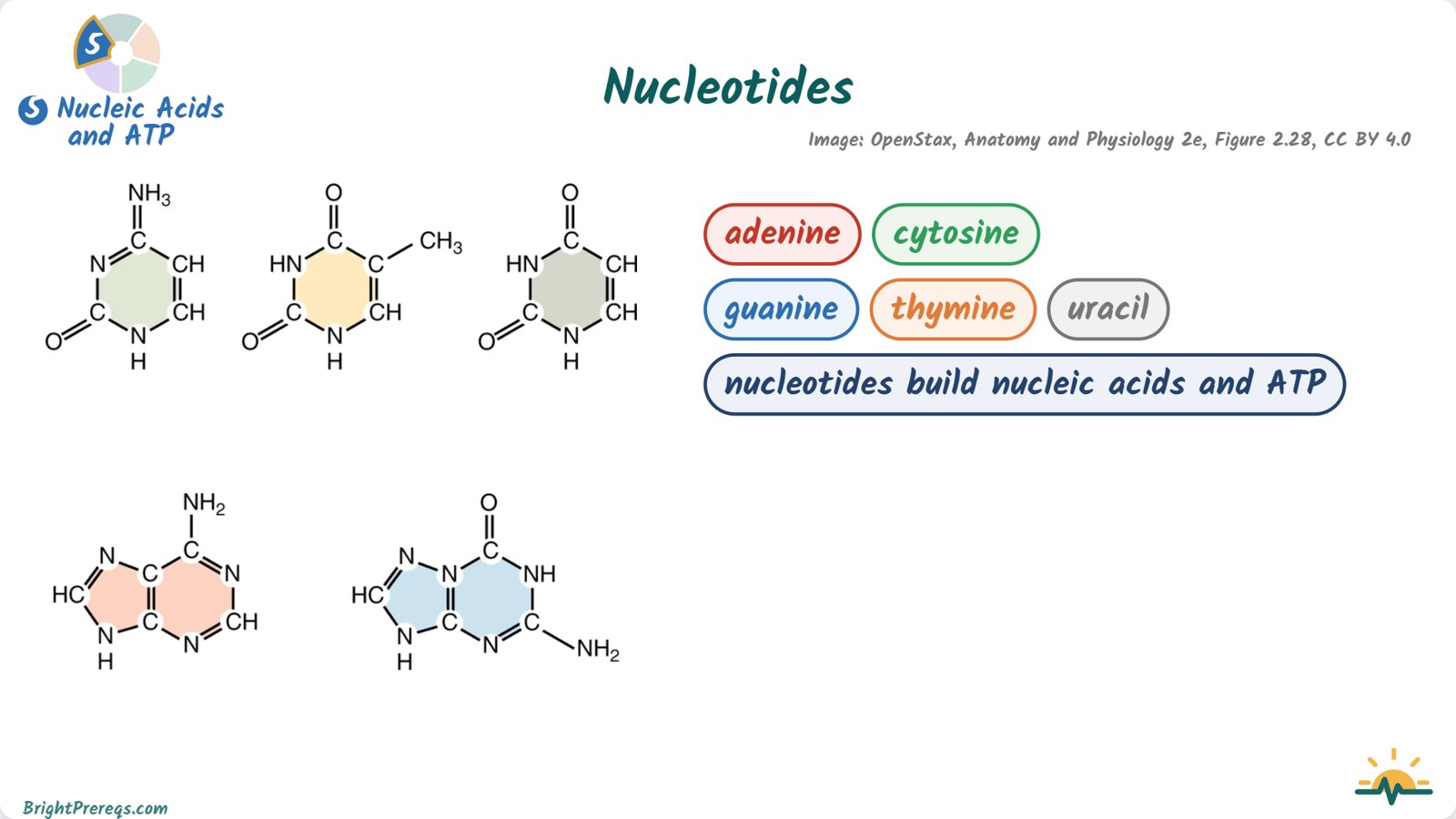
The fourth kind of organic compound is the nucleotide. Each has three parts: one or more phosphate groups, a five-carbon sugar, and a base that contains nitrogen.
There are five bases: adenine, cytosine, guanine, thymine and uracil. Nucleotides build the nucleic acids, and the energy molecule ATP.
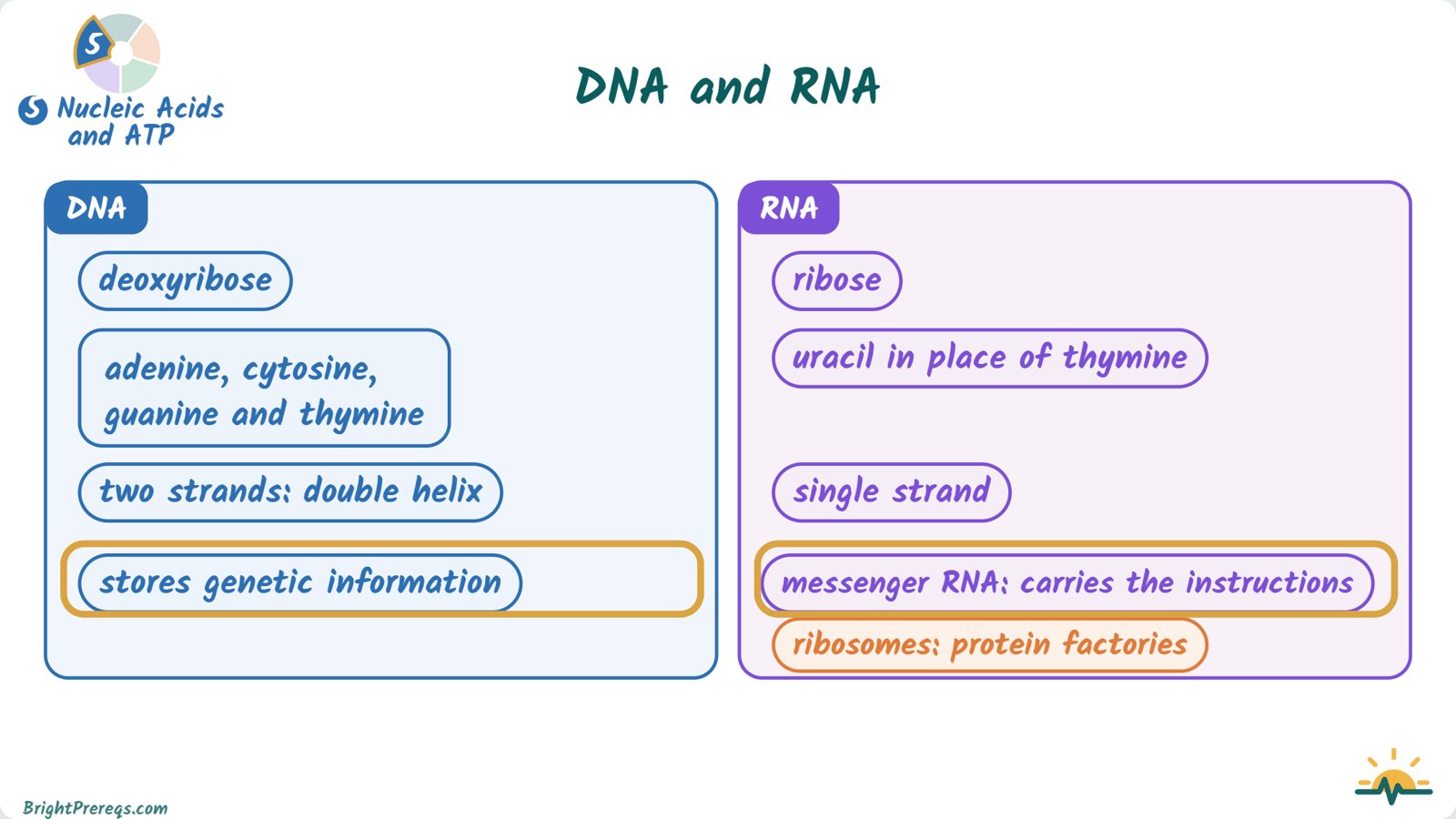
The first nucleic acid is deoxyribonucleic acid, or DNA. It stores genetic information.
In DNA, the sugar is deoxyribose, named for having one less oxygen atom than ribose. The bases are adenine, cytosine, guanine and thymine.
Two strands of DNA, held together by hydrogen bonds between their bases, twist into a double helix.
The order of the bases forms genes, a code for building proteins. Humans have almost 22,000 genes, on 46 chromosomes, in the nucleus of each cell.
Red blood cells are the exception: they lose their nucleus as they develop. And each person's genes are unique, except in identical twins.
The second nucleic acid is ribonucleic acid, or RNA. Its sugar is ribose, uracil takes the place of thymine, and it is a single strand.
Messenger RNA carries the instructions from DNA out to the ribosomes, the cell’s protein factories. So DNA stores the code, and RNA carries it to where proteins are built.
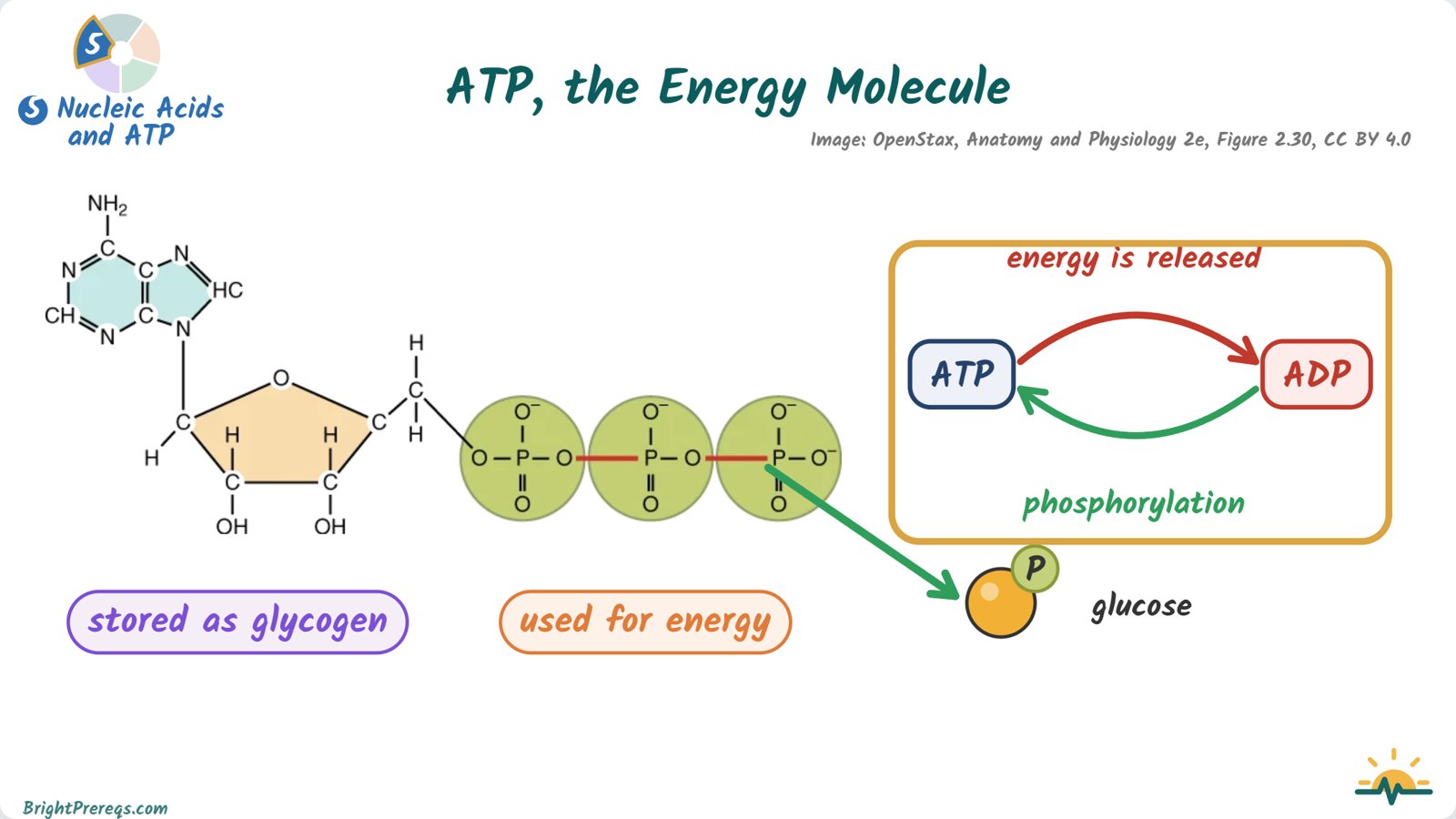
The energy molecule is adenosine triphosphate, or ATP. It is made of a ribose sugar, an adenine base, and three phosphate groups.
The bonds between its phosphates store a lot of energy. That energy powers muscle contraction, moves substances into and out of cells, and builds new molecules.
When one phosphate breaks off, energy is released, and ATP becomes adenosine diphosphate, or ADP.
Adding a phosphate back is called phosphorylation, and it rebuilds ATP. That takes the same amount of energy again.
ATP can also hand a phosphate to glucose as it enters a cell. Then the glucose can be stored as glycogen, or used right away for energy. So ATP gives energy by losing a phosphate, and is rebuilt by gaining one.
To recap. What are they made of? Small units, monomers, join into polymers by dehydration synthesis, and split apart by hydrolysis.
Carbohydrates are built from sugar units. Every cell can burn glucose, and the body stores it as glycogen in the liver and muscles.
Lipids are made mostly of hydrocarbons. Fat stores fuel, phospholipids build membranes, and cholesterol builds bile and hormones.
Proteins are chains of 20 kinds of amino acids, and their shape decides their job. Enzymes are proteins that speed up reactions. When the glycogen and fat stores run out, burning protein breaks down tissue, and the body wastes away.
Last, nucleotides build DNA, which stores the code, RNA, which carries it, and ATP, the cell’s ready energy.
The next video covers the cell: its membrane, transport and organelles.
The chapters this video teaches from, in OpenStax Anatomy and Physiology 2e and OpenRN General Anatomy & Physiology, free to read on BrightPrereqs.com.
Bright Beats Anatomy and Physiology, in textbook order.
Textbook pages cited: Anatomy and Physiology 2e, J. Gordon Betts et al., OpenStax, Rice University, CC BY-NC-SA 4.0, access for free at openstax.org; General Anatomy & Physiology, edited by Julia Brown, WisTech Open, CC BY-NC-SA 4.0.