Bright Beats Anatomy and Physiology · Study Sheet
The Cell: Membrane, Transport and Organelles
Body Basics · Video code CL2
 Scan to watch
Anatomy and Physiology, Body Basics. The cell: its membrane, how things cross it, and the organelles inside.
How does a cell choose what gets in, and how do its tiny parts keep it alive?
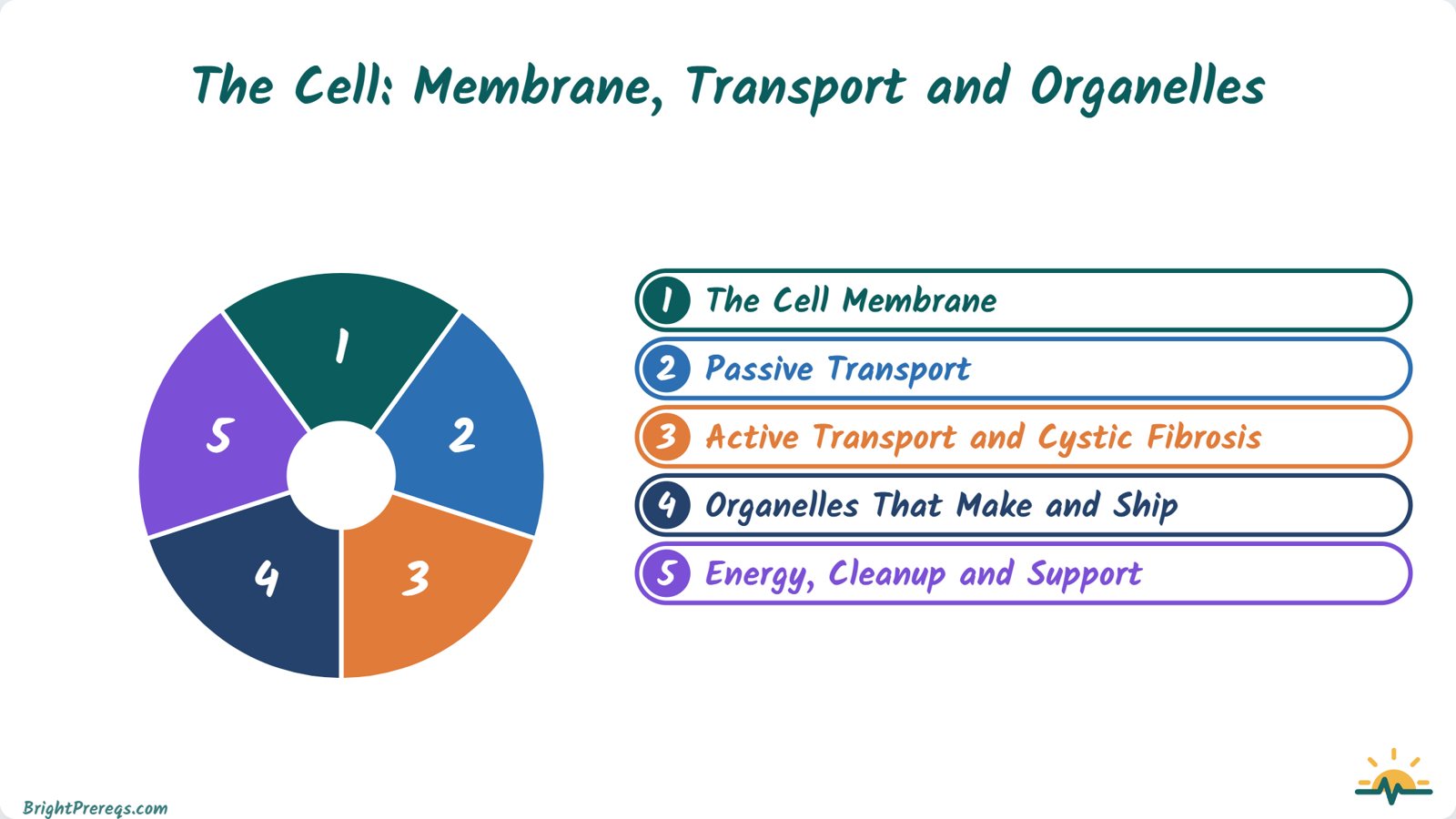
Five parts follow: the cell membrane; passive transport; active transport and cystic fibrosis; the organelles that make and ship; and energy, cleanup and support.
Part 1: the cell membrane, the wall that controls what passes in or out.
Every living cell has a cell membrane around it. It is also called the plasma membrane.
Skin separates the body from the world outside. In the same way, the membrane separates the inside of the cell from the outside. It protects the cell and controls what passes in or out.
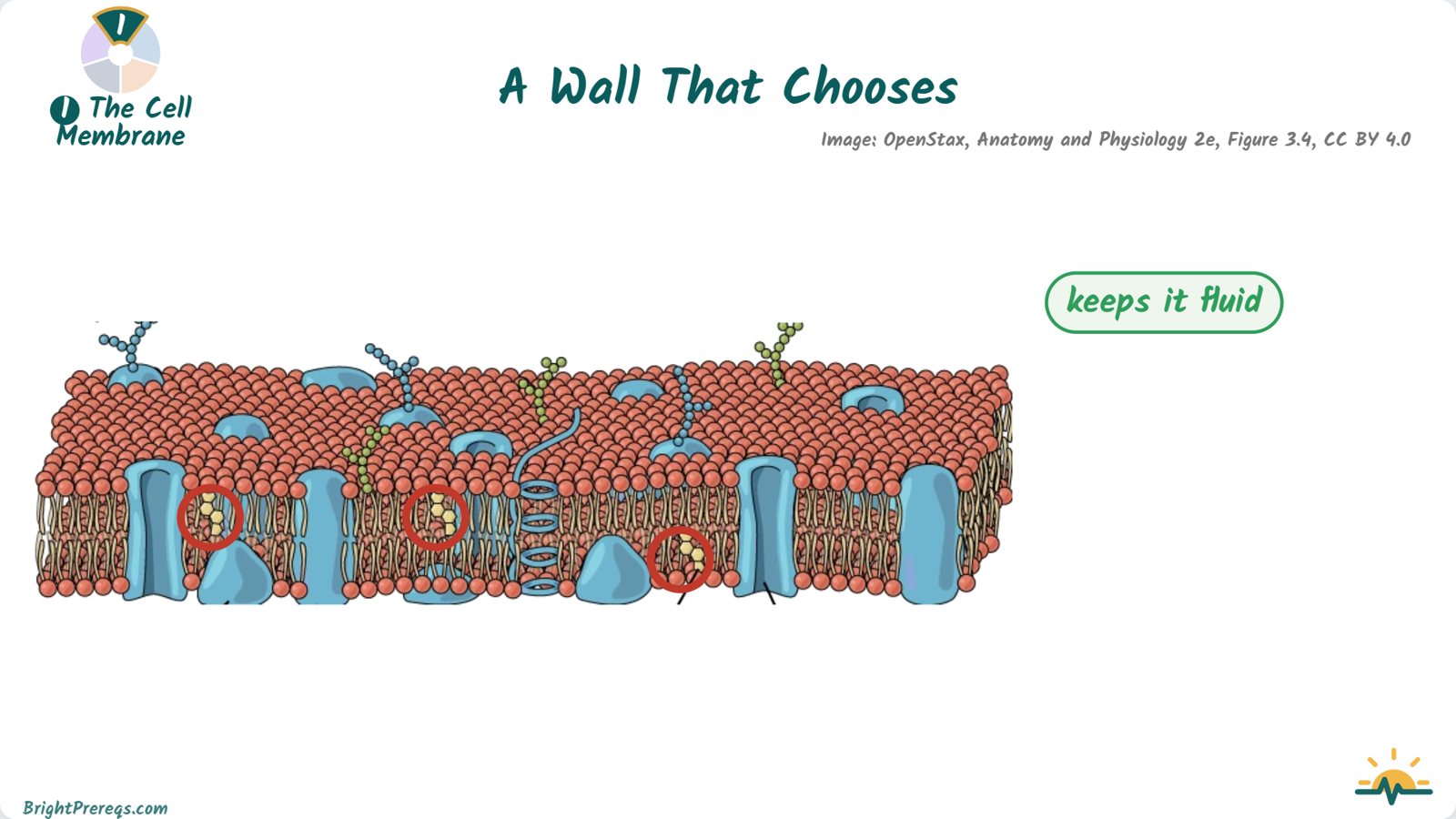
The membrane is made mostly of phospholipids, laid back to back in two layers. Two layers like this are called a bilayer.
Each phospholipid has a head and two tails. The head is charged, which makes it water loving, so it faces the watery fluid inside and outside the cell.
The tails are uncharged, which makes them water fearing. They meet in the middle of the membrane, tail to tail, away from the water.
Soap works the same way. One end mixes with water, and the other end traps grease, so the grease washes away.
The watery fluid on each side has its own name. The fluid inside a cell is intracellular fluid. The fluid outside is extracellular fluid. Extracellular fluid that is not in the blood vessels is called interstitial fluid.
Cholesterol sits in the membrane too, and it keeps the membrane fluid. Its parts are not locked in place; they move. Heads out to the water, tails in the middle: a wall that stays fluid.
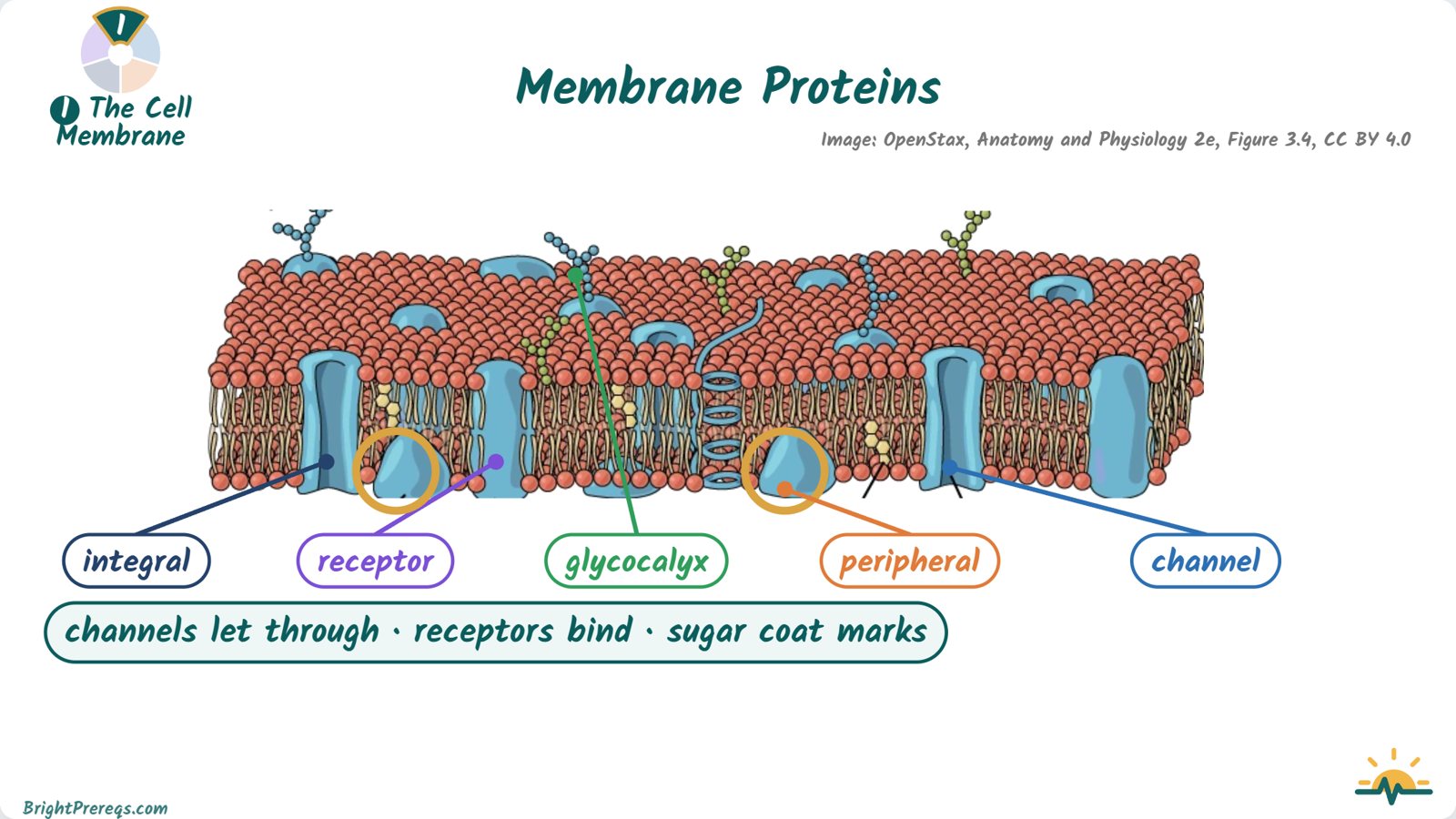
Proteins are scattered through the membrane. Some are built in, and some sit on the surface. An integral protein is built right into it.
A channel protein is one kind. It lets certain materials, such as some ions, pass into or out of the cell.
Other proteins mark who the cell is. A receptor is one kind. It binds one specific molecule outside the cell, and that starts a reaction inside.
The molecule that fits a receptor is called a ligand. On nerve cells, dopamine fits its receptor, and a channel opens to let ions flow in.
Some proteins carry chains of sugar. Together, these sugars make a fuzzy coat around the cell, called the glycocalyx.
This coat comes from a person's own genes, and it marks each cell as belonging to that body. It is how immune cells know not to attack the body's own cells.
It is also why an organ donated by another person might be rejected.
Peripheral proteins sit on the inner or outer surface. On cells of the intestine, some act as enzymes that break down nutrients into pieces small enough to pass into the blood. Built in or on the surface, each protein has a job: channels let things through, receptors bind molecules, and the sugar coat marks the cell.
Part 2: passive transport, crossing the membrane with no energy from the cell.
The membrane controls ions, such as sodium, potassium, calcium and chloride. It controls nutrients, such as sugars, and wastes, such as carbon dioxide, which must leave the cell.
This is called selective permeability. The phospholipids are packed tightly, and the middle of the membrane is water fearing. So only some things can pass through on their own.
Small things that are not water loving slip right through on their own, such as oxygen, carbon dioxide, other lipids and alcohol.
Things that dissolve in water, such as glucose, amino acids and electrolytes, need help to cross, because the water-fearing tails push them away.
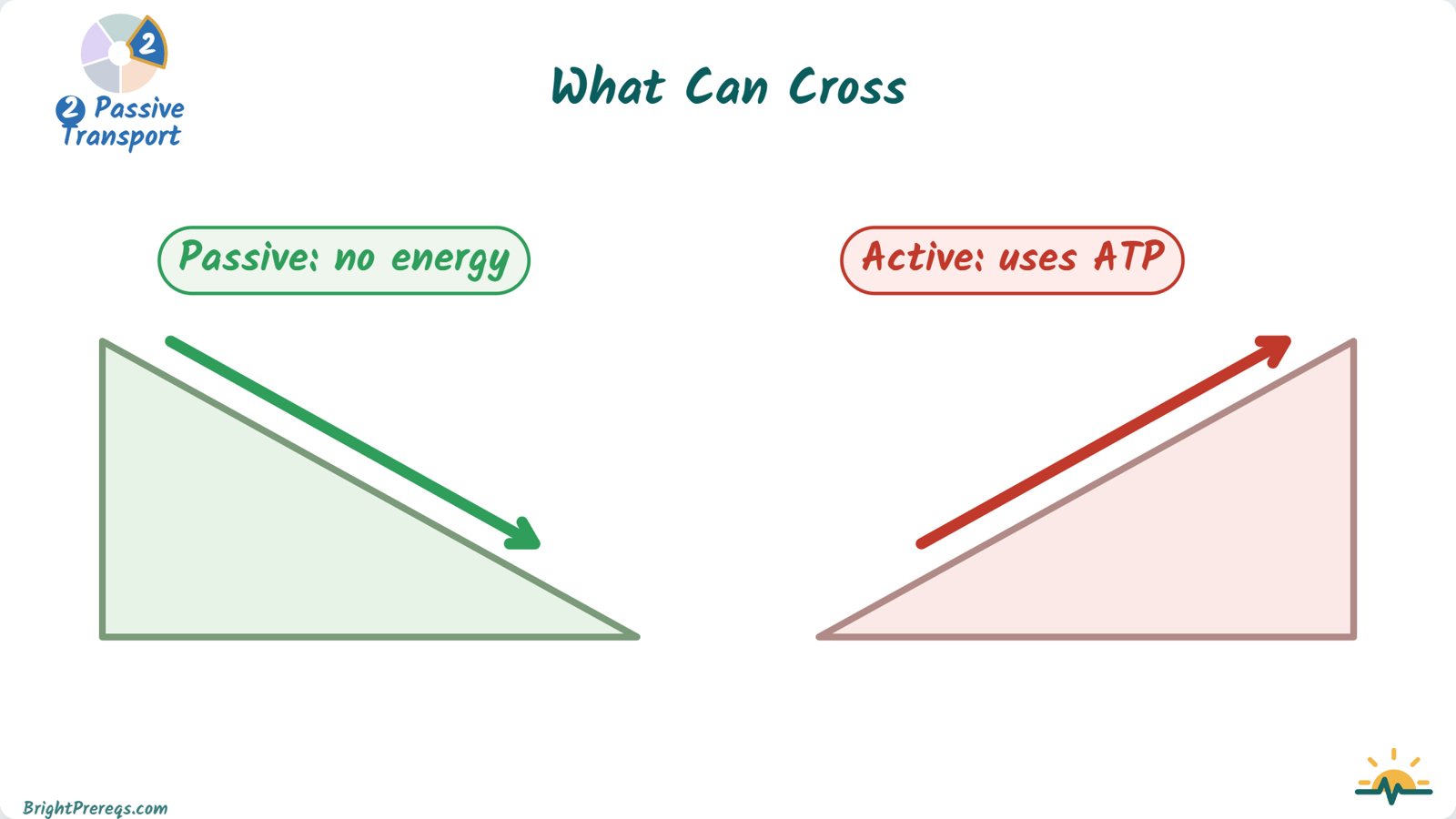
There are two ways across. Passive transport uses no energy from the cell. Active transport uses energy from adenosine triphosphate, or ATP.
Passive transport is like coasting down a hill on a bike. Active transport is like pedaling uphill.
Passive transport depends on a concentration gradient. That is a difference in how much of a substance there is in two places.
In diffusion, particles spread from where there are more of them to where there are fewer, until they are even.
Spray perfume in a closed bathroom, and the scent spreads to every corner. A spoonful of sugar spreads through tea the same way.
Warmth speeds diffusion up, because warm particles bump into each other and spread out faster. A body temperature of around 98.6 degrees Fahrenheit helps particles spread in the body.
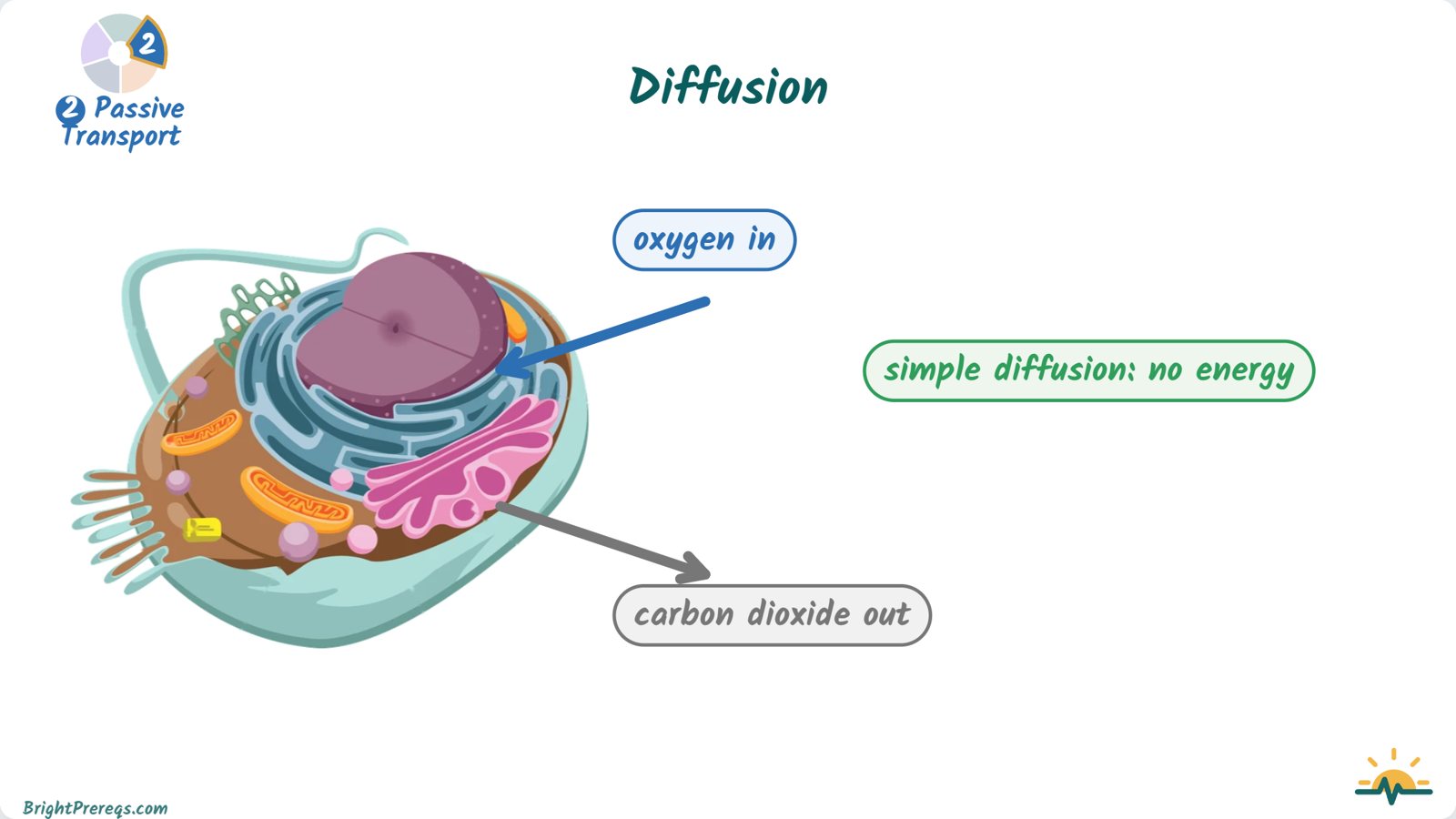
Cells use up oxygen, so oxygen diffuses in. Cells make carbon dioxide, so it diffuses out. This is simple diffusion, and it costs the cell no energy.
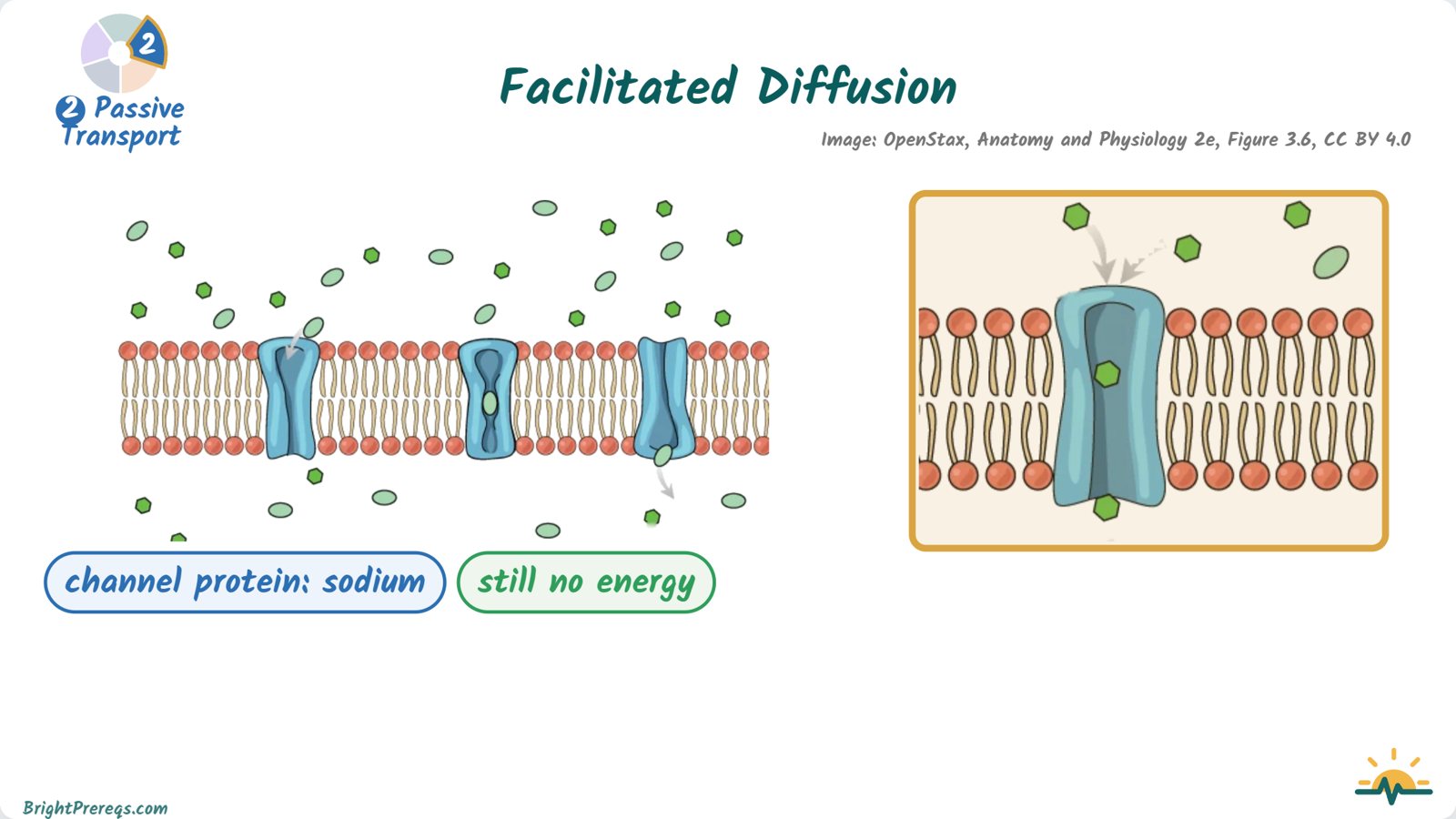
Some things are too big, too charged or too water loving to slip through. They cross by facilitated diffusion, with help from membrane proteins.
Glucose is large, so a carrier protein, the glucose transporter, moves it into the cell. There, glucose is used to make ATP.
Sodium is charged, so it passes through a channel protein, the sodium channel. Carrier or channel, facilitated diffusion still needs no energy from the cell.
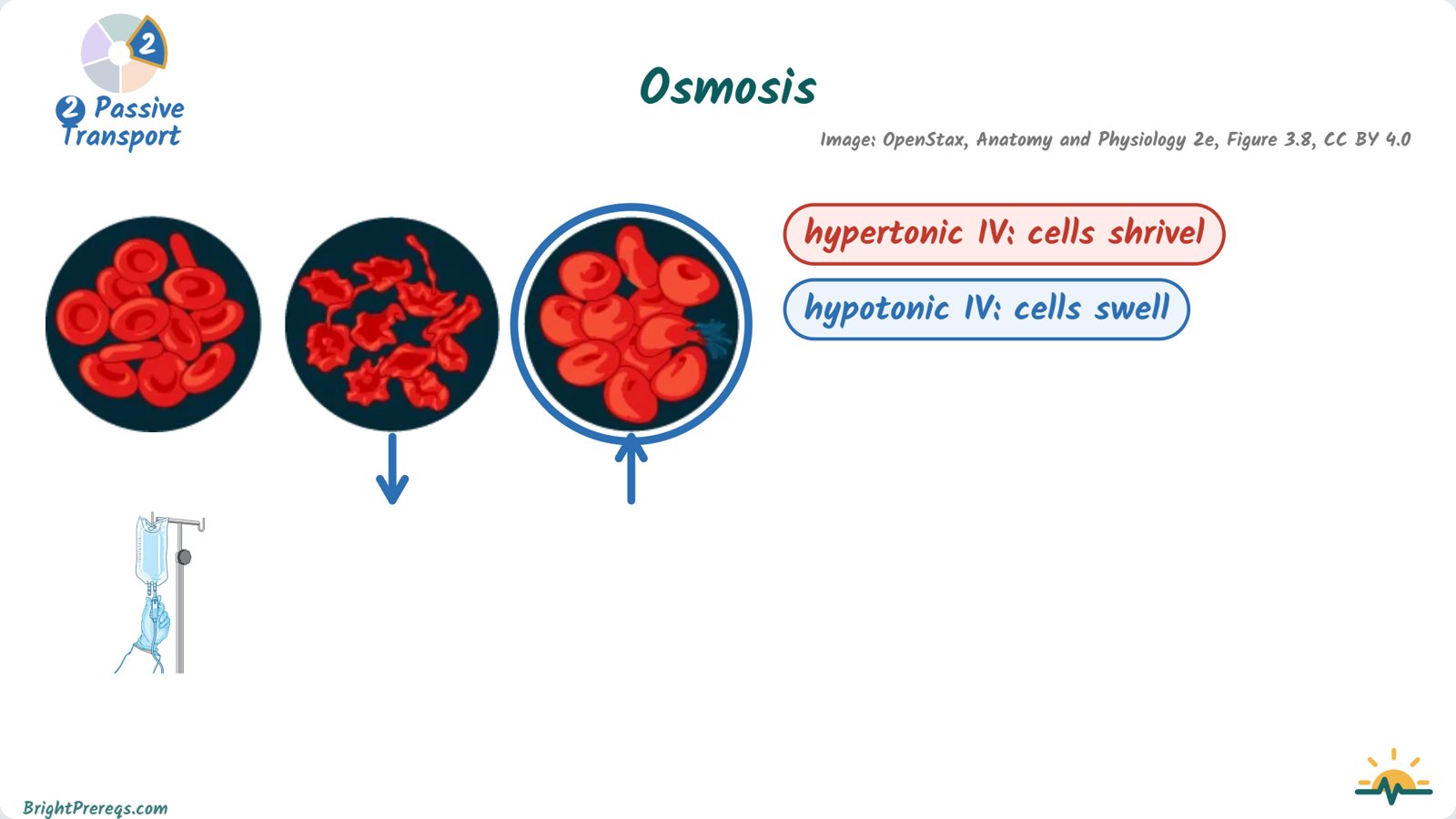
Water crosses too. Osmosis is the diffusion of water through a membrane.
Water moves toward the side with more dissolved particles, because that side has fewer water molecules. An easy way to remember it: water follows salt.
When the fluid outside a cell has the same concentration as the inside, it is isotonic. Water goes in and out evenly, and the cell keeps its usual shape.
A hypertonic fluid has more dissolved particles than the cell. Water follows the salt out of the cell, and the cell shrivels.
A hypotonic fluid has fewer. Water follows the salt into the cell, and the cell swells and may even burst.
Keeping every cell in an isotonic fluid is a key part of homeostasis, because some cells do not control the water moving across them. The kidneys do much of this work.
Fluids given into a vein, called IV fluids, follow the same rule. A hypertonic IV fluid pulls water out of the cells and into the blood, so the cells shrivel.
A hypotonic IV fluid sends water from the blood into the cells, so the cells swell. Same, more or fewer particles: water always follows salt.
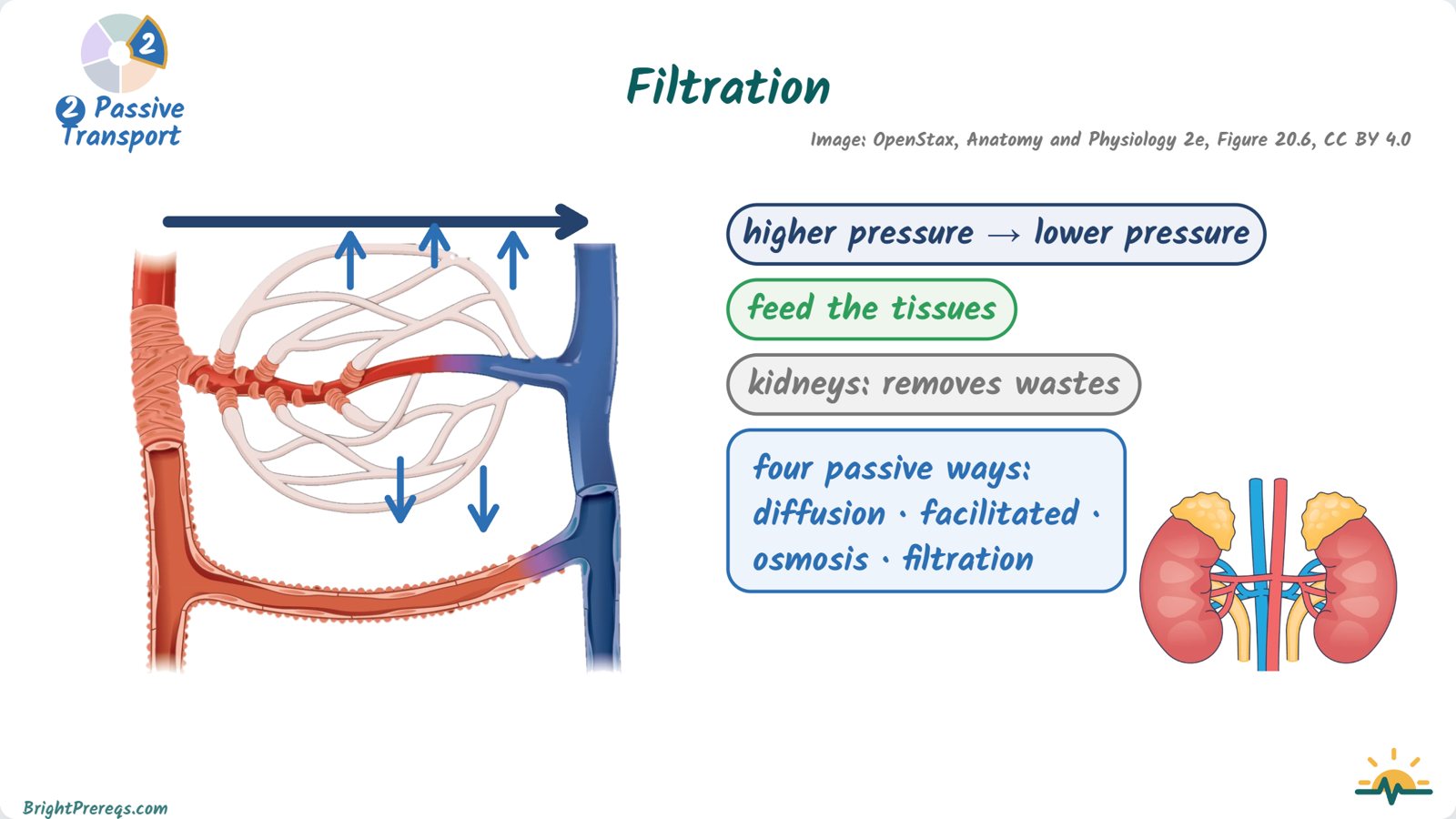
One more passive process is filtration. Here pressure, not a concentration gradient, pushes fluid, and what is dissolved in it, from higher pressure to lower pressure.
Filtration pushes plasma out of the capillaries to feed the tissues. In the kidneys, it removes wastes from the blood. Diffusion, facilitated diffusion, osmosis and filtration: four passive ways across, and none uses the cell's energy.
Part 3: active transport, crossing with energy from ATP, and what goes wrong in cystic fibrosis.
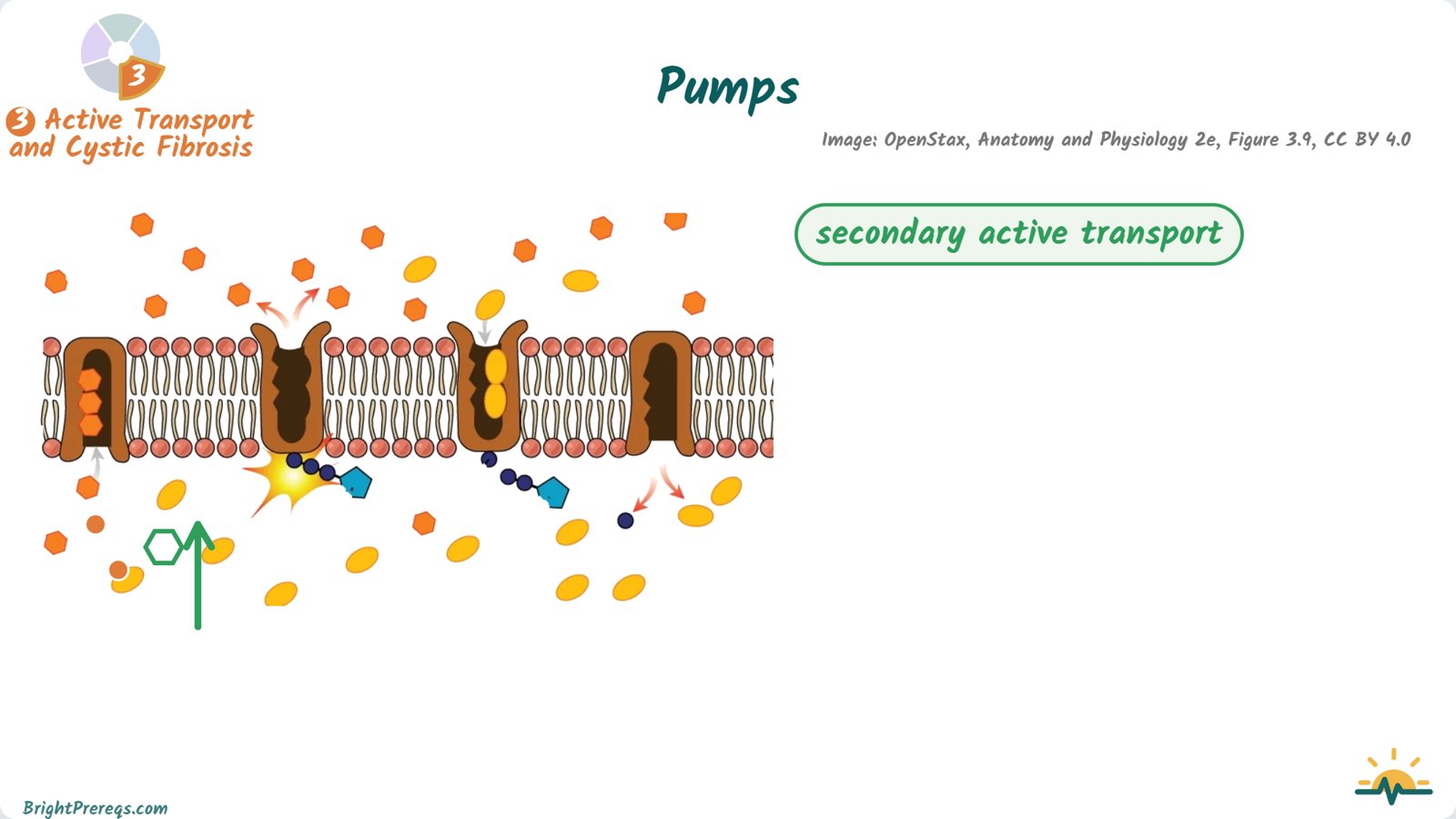
Active transport is the uphill ride. It uses ATP to move a substance, usually against its gradient: from where there is less to where there is more.
One of the most common kinds uses pumps. A key one is the sodium-potassium pump. Like pumping up a bike tire, a pump takes energy, here from ATP.
For each ATP it uses, the pump moves three sodium ions out of the cell and two potassium ions in.
This keeps the inside of a nerve cell negative, at about minus 70 millivolts. Nerve cells spend most of their ATP running these pumps.
The pump also stores up energy for other carriers. It keeps sodium high outside the cell, so sodium flows back in easily. One carrier uses sodium flowing back in to pull glucose into the cell with it. This is called secondary active transport. ATP runs the pump, and the pump's gradient runs the next carrier.
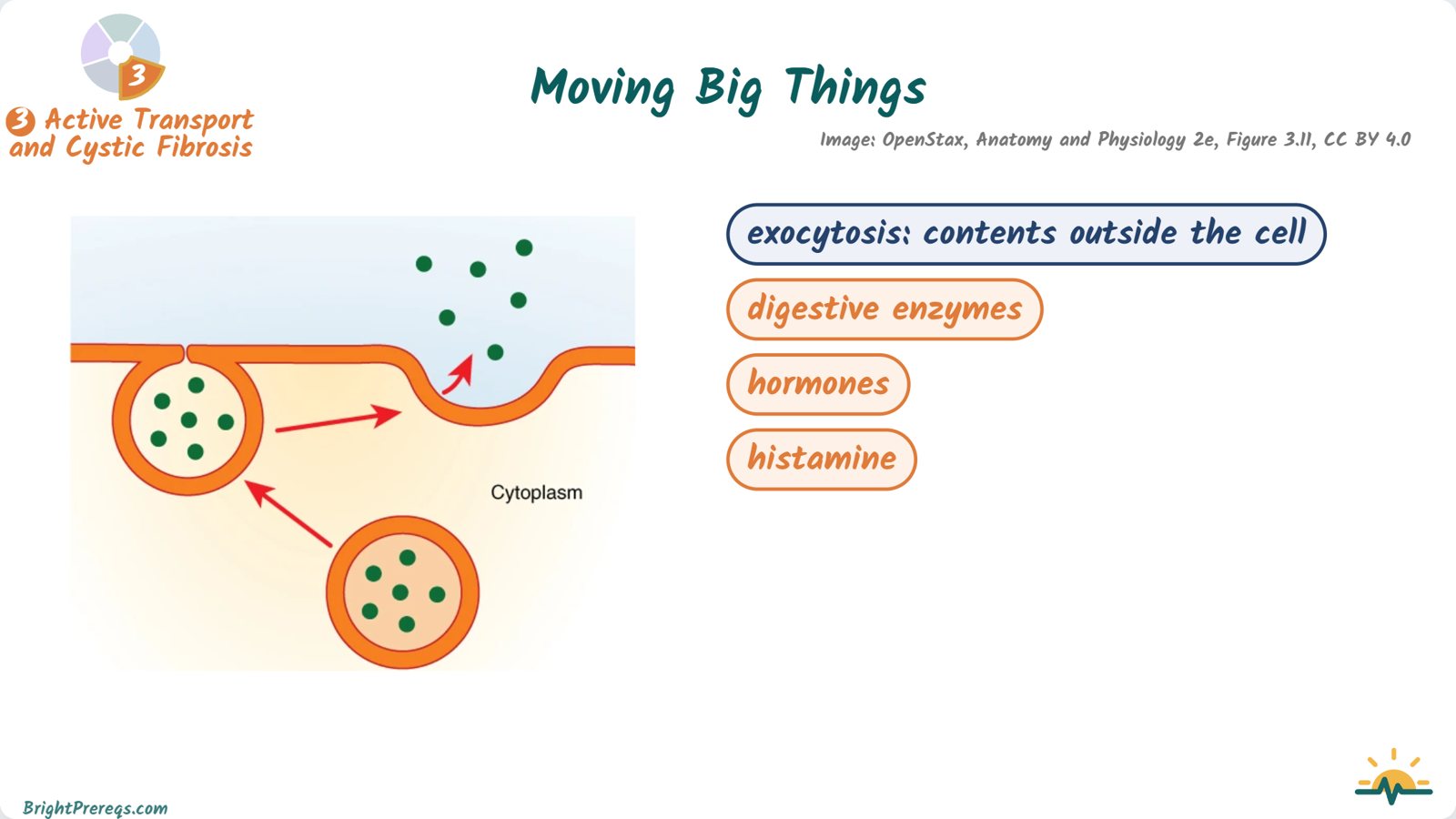
Some materials are too big for any protein. In endocytosis, the cell wraps them in a piece of its membrane, then pinches it off as a sac, called a vesicle.
One kind is phagocytosis, which means cell eating. Like little Pac-Men, many immune cells patrol the tissues, swallow bacteria this way, then digest them.
Another is pinocytosis, which means cell drinking. The cell takes in fluid with dissolved substances.
A third kind, receptor-mediated endocytosis, is choosy. Red blood cells need iron for hemoglobin, and they take it in this way. In the blood, iron is carried by a protein called transferrin, which binds to receptors on the red blood cells.
The reverse is exocytosis. Like a factory shipping out a product, a vesicle joins the cell membrane and empties its contents outside the cell.
This is how the stomach and pancreas release digestive enzymes, how gland cells release hormones, and how some immune cells release histamine. In by endocytosis, out by exocytosis: big things cross in vesicles.
When one membrane channel fails, a disease can follow. Cystic fibrosis is a genetic disease. It damages the lungs most of all, and it also affects the liver, pancreas and intestines.
Cystic fibrosis affects about 30,000 people in the United States, with about 1,000 new cases each year.
About 50 years ago, a child born with it rarely lived past 10. Today, with better treatment, many people with cystic fibrosis live into their 30s.
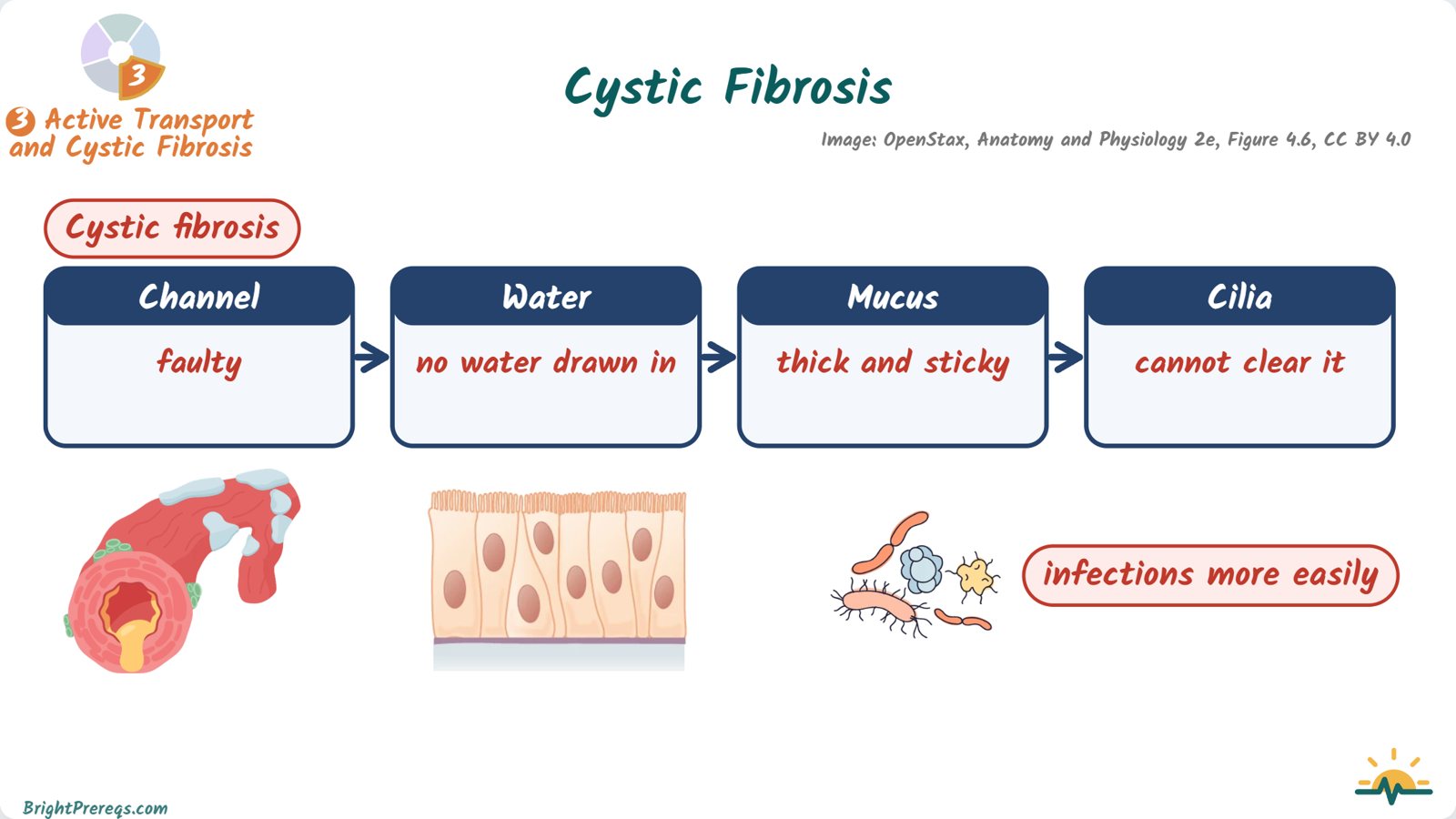
The cause is one channel. In typical cells, it carries chloride ions out of the cell. In cystic fibrosis, the gene for this channel is changed. The channel is faulty, and the cell usually breaks it down.
In typical airways, the chloride carried out makes the outside of the cells negative, and that draws positive sodium. Chloride and sodium build up outside the cells, in the mucus. Water follows them by osmosis, so the mucus stays thin.
Tiny hairs on the airway cells, called cilia, sweep the thin mucus up and away from the lungs, with its dust and bacteria.
In cystic fibrosis, the faulty channel means no water is drawn into the mucus. It becomes thick and sticky, the cilia cannot clear it, and the airways block.
Bacteria are not carried away, so lung infections happen more easily. One faulty channel: no water, thick mucus, blocked airways.
Part 4: now inside the cell, the organelles that make and ship its products.
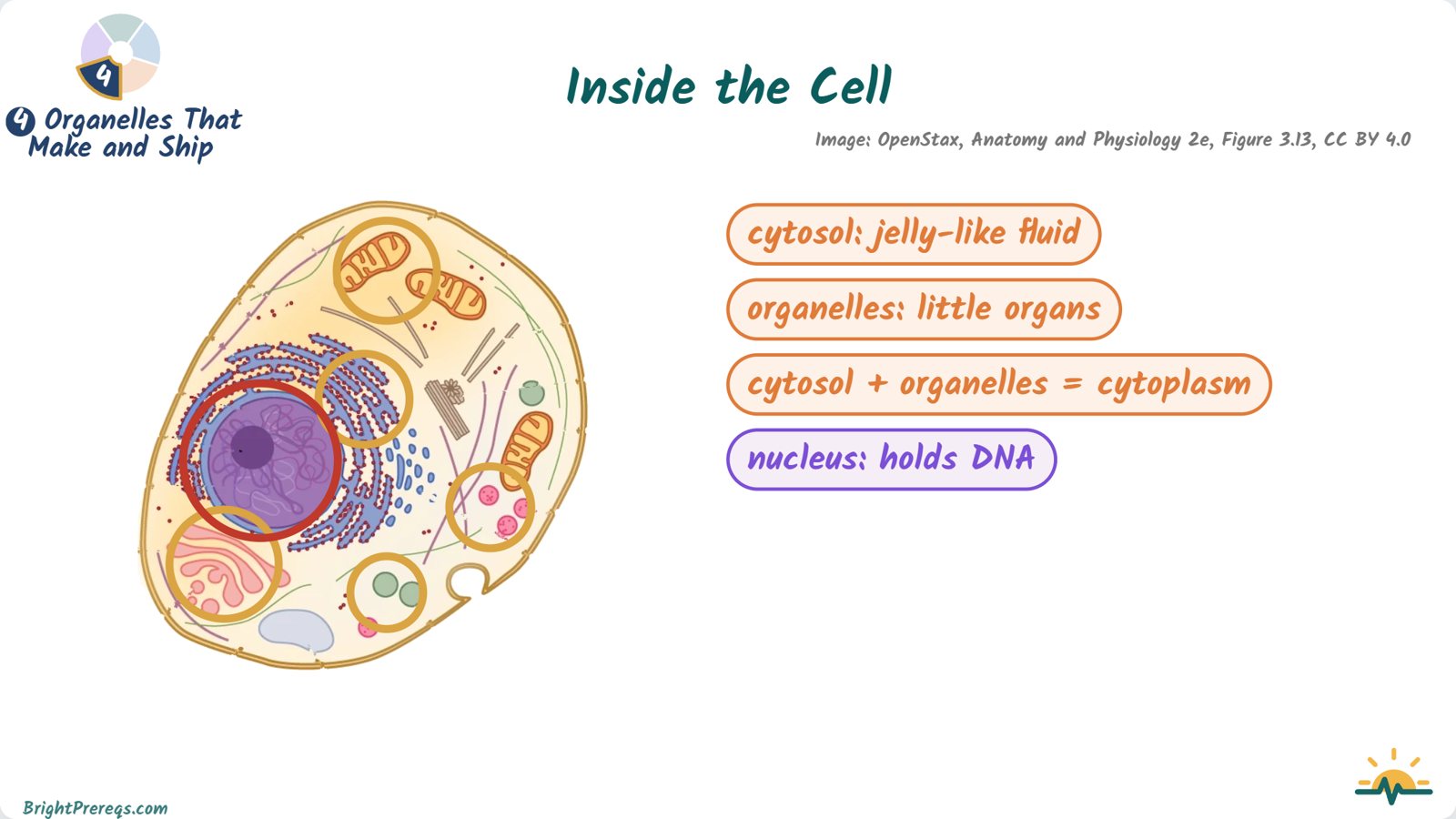
Inside the membrane is the cytosol, a jelly-like fluid where the cell's chemical reactions take place.
In it float the organelles. The word means little organs. Each one has its own job, and together they keep the cell healthy.
The cytosol and the organelles together make up the cytoplasm. The nucleus, the central organelle, holds the cell's DNA. Membrane, cytoplasm, nucleus: the cell from the outside in.
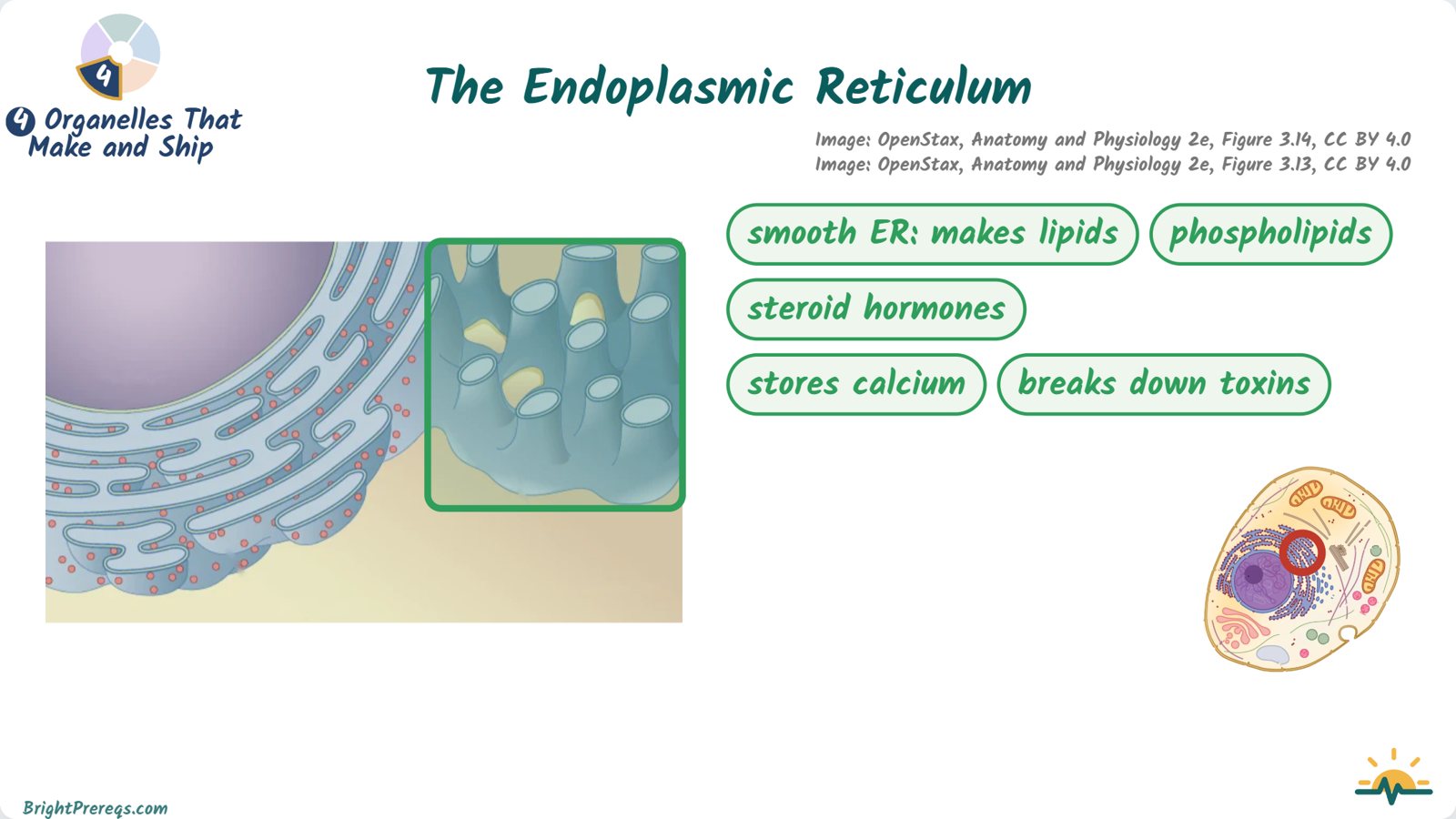
The endoplasmic reticulum, or ER, is a winding system of channels joined to the covering of the nucleus, like the canals in Venice. All that winding gives it a large surface. It moves, makes and stores materials.
Rough ER is dotted with ribosomes, where proteins are made, and they give it its bumpy look and its name. It builds proteins for the membrane, or for export out of the cell.
Smooth ER has no ribosomes. It makes lipids, such as phospholipids and steroid hormones.
Smooth ER also stores calcium, which nerve cells use as the trigger to release neurotransmitters, and it breaks down certain toxins.
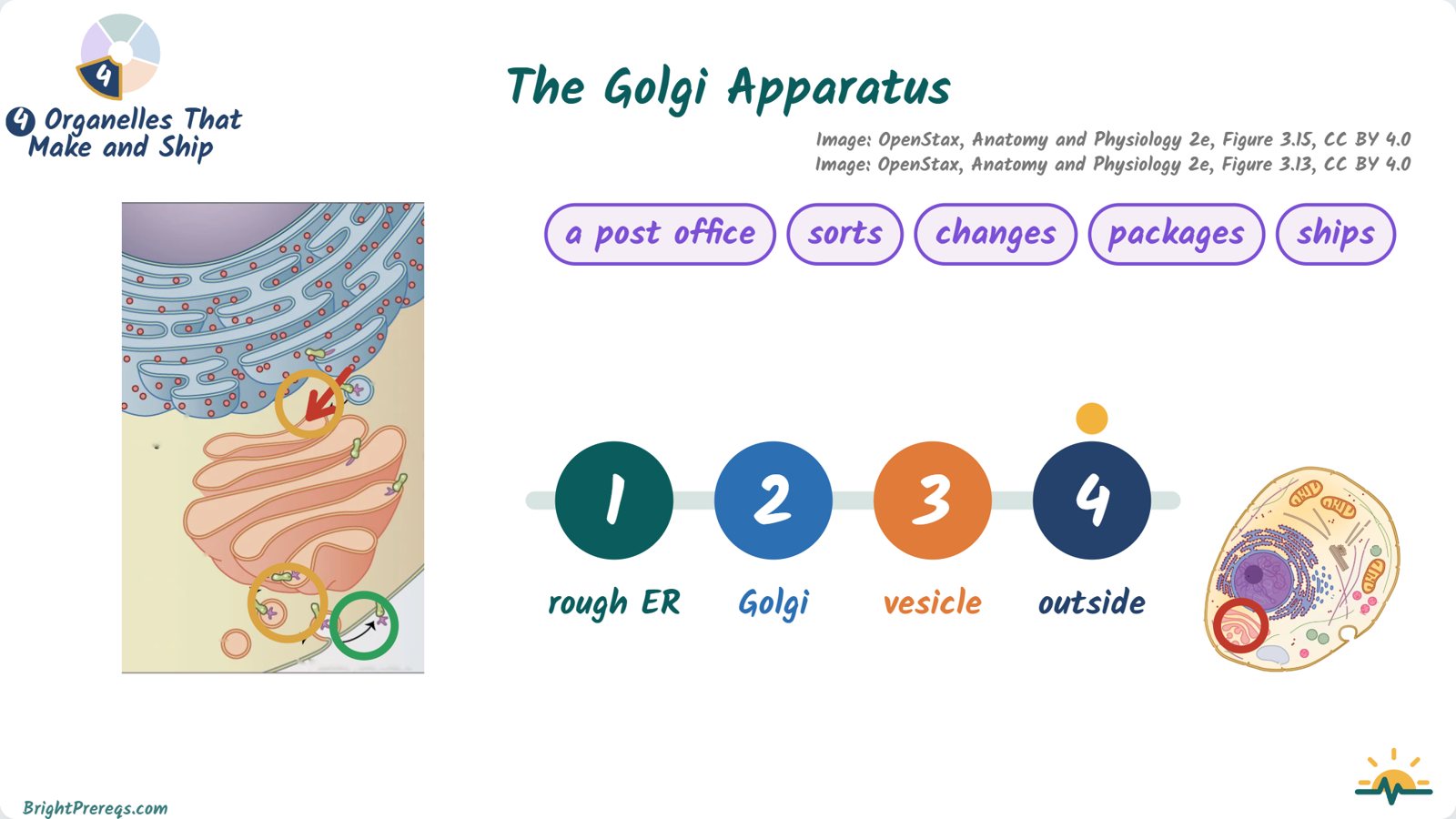
Proteins from the rough ER travel in vesicles to the Golgi apparatus. It looks like a stack of flat pancakes.
The Golgi works like a post office. It sorts, changes, packages and ships the products.
One side takes products in. The other side sends them out in new vesicles. A vesicle bound for export joins the cell membrane and releases them outside. Made in the rough ER, packed in the Golgi, shipped in a vesicle: that is the path out of the cell.
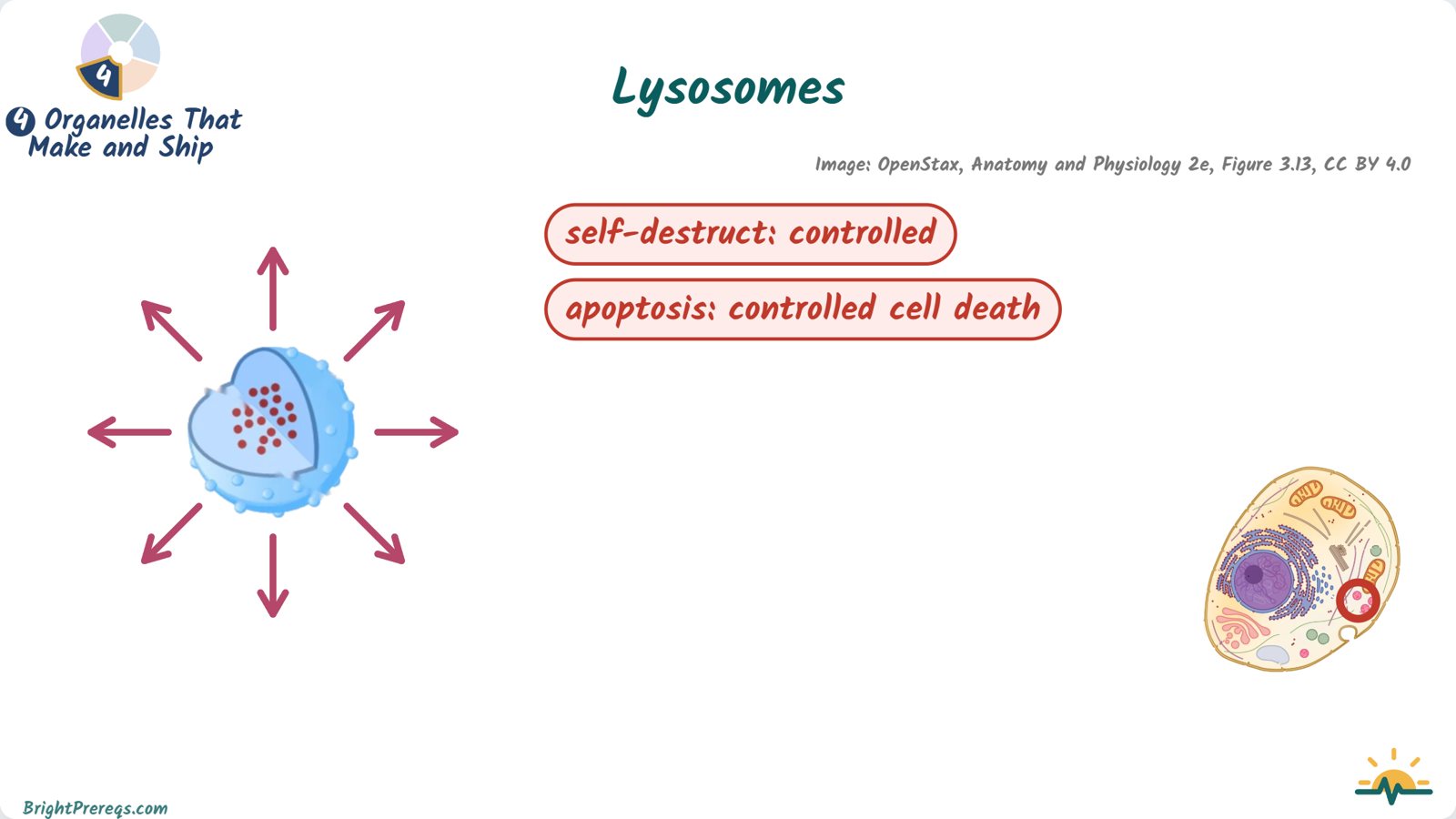
Some Golgi packages hold digestive enzymes. These become lysosomes, the cell's wrecking crew.
These lysosomes break down worn-out parts, such as a damaged organelle. A cell digesting its own parts is called autophagy, or self-eating.
They also break down what comes from outside. When a white blood cell swallows bacteria, its lysosomes digest them.
In a damaged or unhealthy cell, lysosomes can open and release their enzymes, killing the cell. This self-destruct keeps cell death controlled. Controlled cell death is called apoptosis.
Part 5: energy, cleanup and support, the organelles that power the cell, clear its poisons and hold its shape.
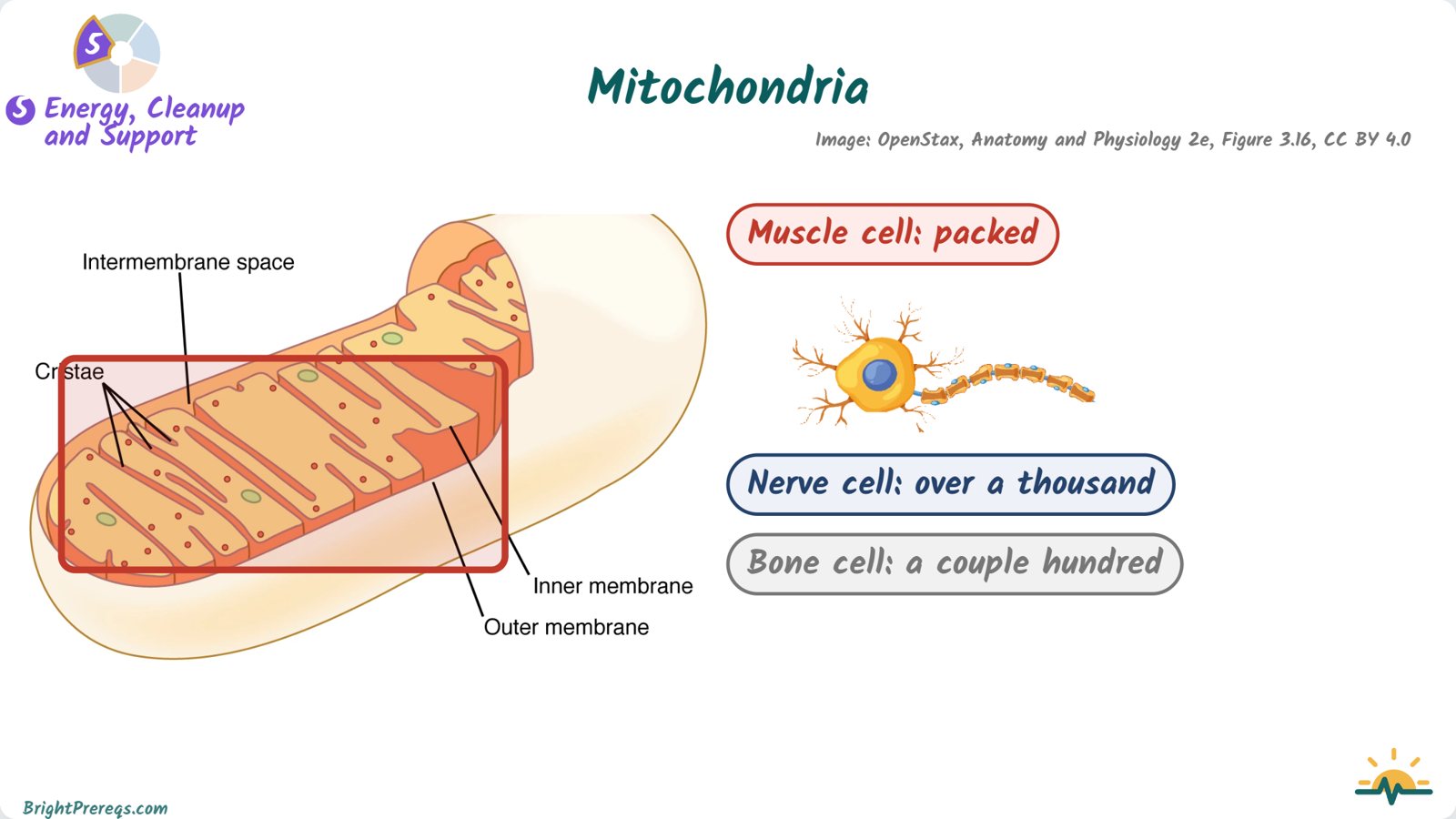
The mitochondria are bean-shaped organelles, the cell's energy transformers. Each one has two membranes, and the inner one is deeply folded.
Along that inner membrane, cellular respiration turns the energy in nutrients, such as glucose, into ATP, the energy a cell can use.
Cellular respiration needs oxygen. That is why breathing never stops. Without enough oxygen, cells cannot make enough ATP to stay alive for long.
Busy cells have more of them. Muscle cells need ATP to contract, so they are packed with mitochondria. A nerve cell needs ATP to run its sodium-potassium pumps, so it has over a thousand. A bone cell is much less busy, and may have only a couple hundred.
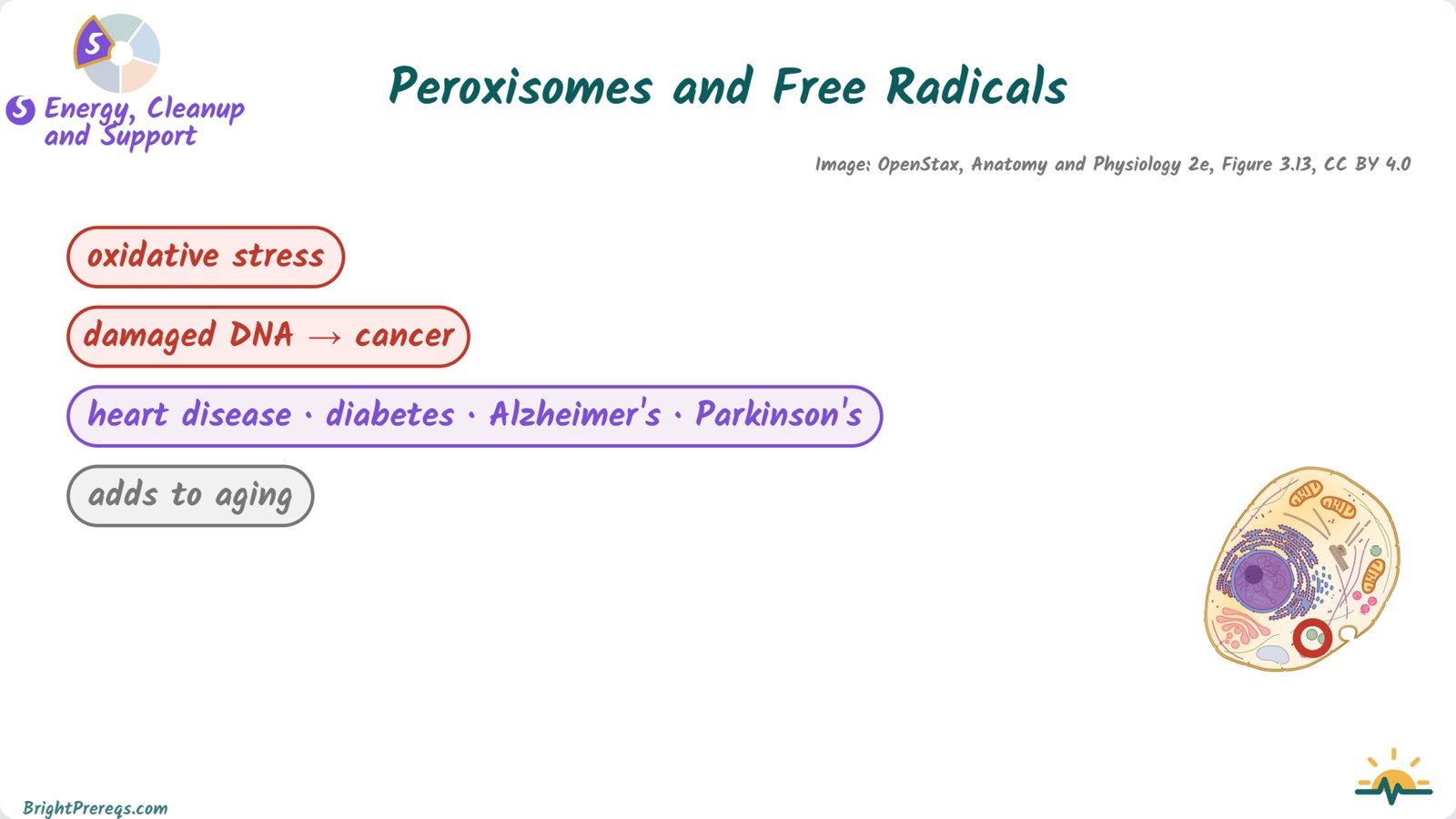
Then there are peroxisomes, sacs that hold mostly enzymes. They break down lipids, and they neutralize poisons, such as alcohol.
The liver cleans toxins from the blood, so liver cells have an especially high number of peroxisomes.
Normal cell work also makes free radicals, highly reactive molecules that can damage cells. They are reactive because they carry free, unpaired electrons. Peroxisomes help neutralize them, like tiny sewage treatment plants.
Substances called antioxidants help too. Some vitamins and other substances, found mostly in fruits and vegetables, act as antioxidants. They work by being oxidized themselves, which halts the chain of damage the free radicals start.
When free radicals build up, the damage is called oxidative stress. Damaged DNA can lead to cancer. Oxidative stress is also believed to play a part in heart disease, diabetes, Alzheimer's disease and Parkinson's disease.
Many scientists believe oxidative stress adds to aging itself.
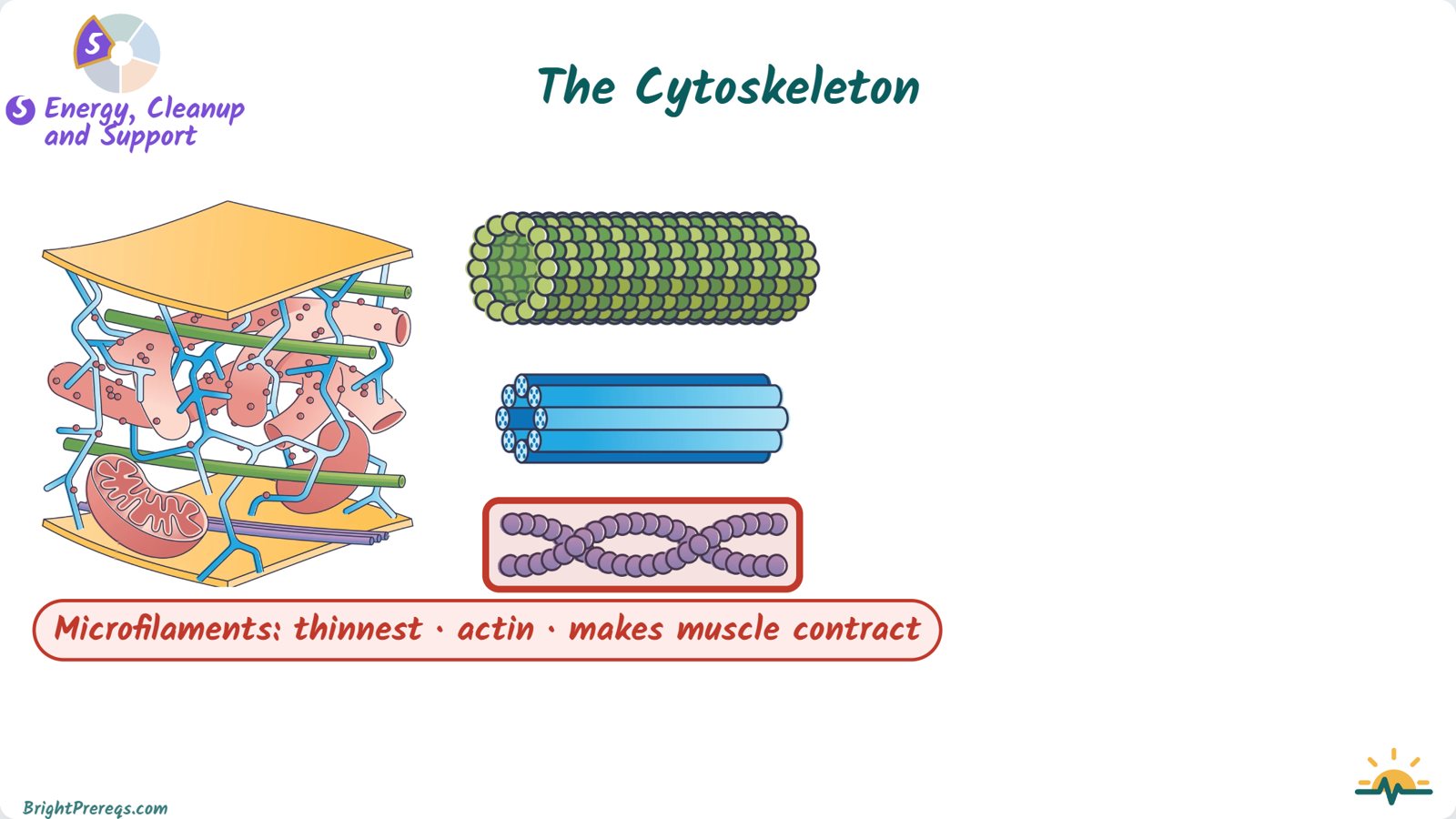
The cytoskeleton is the cell's skeleton, a network of protein threads. It holds the cell's shape, helps the cell move and divide, and moves things inside it.
It has three kinds of filaments. The thickest are microtubules. They keep the cell's shape and help position the organelles.
Microtubules also make cilia. In the airways, beating cilia move dust, mucus and bacteria up and away from the lungs.
In the fallopian tubes, cilia move the egg toward the uterus. The only human cell with a whip-like tail, called a flagellum, is the sperm cell.
In between are intermediate filaments, made of keratin and wound like a rope. They resist pulling forces, and they link cells to each other.
The thinnest are microfilaments, made of a protein called actin. With another protein, myosin, actin makes muscle contract. Thickest to thinnest: microtubules, intermediate filaments, microfilaments.
To recap. What gets in? The membrane is two layers of phospholipids, heads out to the water and tails in, with proteins that let things through and mark the cell as the body's own.
Passive transport runs downhill, with no energy: diffusion, facilitated diffusion, osmosis and filtration. Water follows salt.
In a hypertonic fluid, cells shrivel. In a hypotonic fluid, they swell.
Active transport runs uphill on ATP. The sodium-potassium pump moves three sodium out and two potassium in. In cystic fibrosis, one faulty channel makes the mucus thick and sticky.
How do its parts keep it alive? The rough ER makes proteins, the Golgi ships them, and lysosomes break things down. Mitochondria use oxygen to make ATP, and the cytoskeleton holds the cell's shape.
The next video covers DNA, protein synthesis, cell division and cancer.
The chapters this video teaches from, in OpenStax Anatomy and Physiology 2e and OpenRN General Anatomy & Physiology, free to read on BrightPrereqs.com.
Bright Beats Anatomy and Physiology, in textbook order.
Textbook pages cited: Anatomy and Physiology 2e, J. Gordon Betts et al., OpenStax, Rice University, CC BY-NC-SA 4.0, access for free at openstax.org; General Anatomy & Physiology, edited by Julia Brown, WisTech Open, CC BY-NC-SA 4.0.